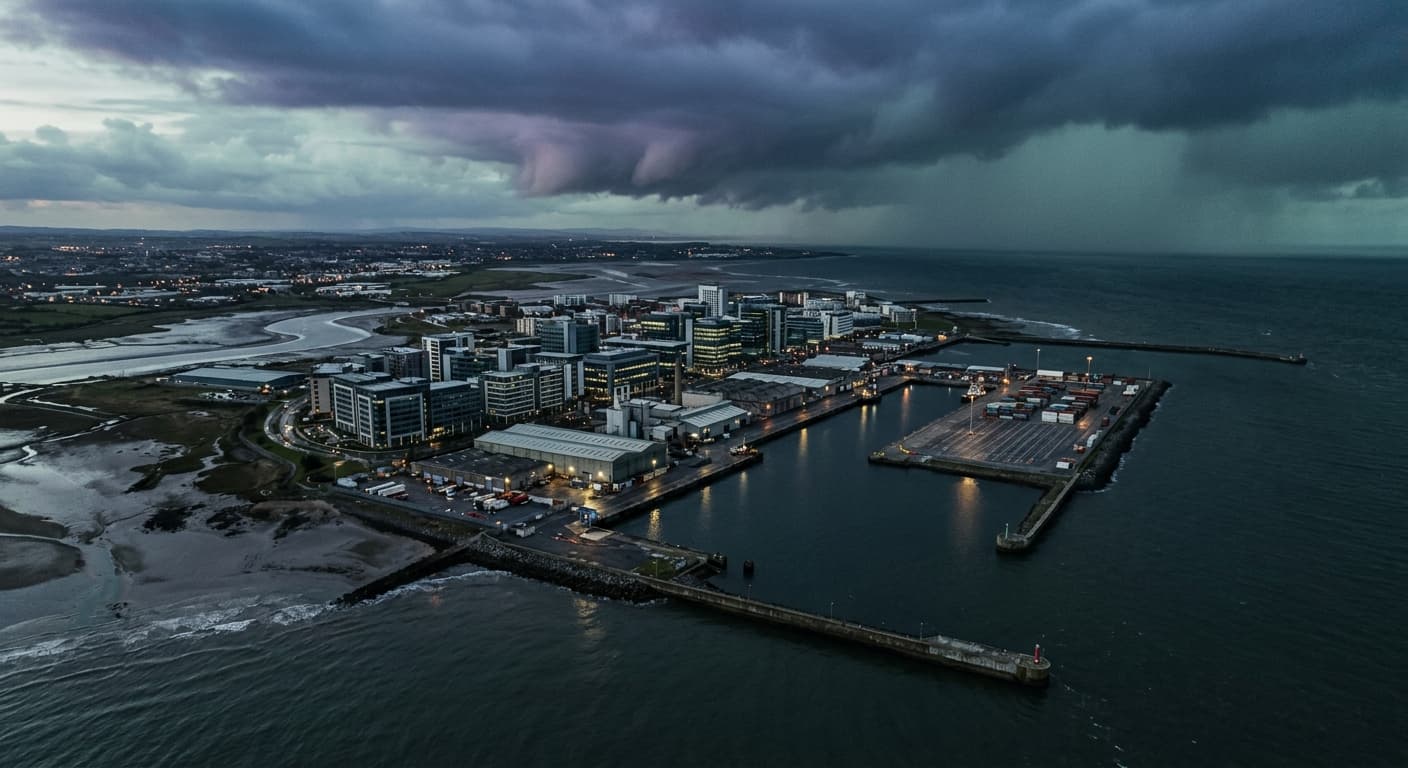
Climate and insurance risk are reshaping the economics of commercial real estate in coastal and catastrophe-prone markets, with property owners confronting sharp increases in premiums, higher deductibles and reduced coverage availability. Recent hurricanes, floods and wildfires have triggered a wave of underwriting adjustments by carriers, leaving office, industrial and multifamily landlords exposed to operating cost spikes that threaten investment returns and loan performance.
The impact on cash flow is immediate and material. As insurance expenses climb, net operating income compresses, weakening the debt service coverage ratios that lenders use to assess creditworthiness. That deterioration heightens refinancing risk when loans come due, particularly for properties already trading at thin spreads or facing softening fundamentals in their local markets.
Some investors are responding by re-underwriting entire portfolios with more conservative climate assumptions, acknowledging that legacy risk models no longer capture the frequency or severity of extreme weather events. The exercise often reveals exposures that were underpriced at acquisition, forcing asset managers to revisit hold periods, capital expenditure budgets and exit strategies for properties in the most vulnerable geographies.
Lenders are also recalibrating. A number of institutions are tightening underwriting standards in high-risk zones, demanding larger reserves, shorter loan terms or higher debt yields to compensate for elevated physical climate risk. In the most exposed markets, some lenders are exiting altogether, narrowing the pool of financing options and pushing up the cost of debt for borrowers who remain.
The shift is prompting a broader reassessment of portfolio construction. Institutional buyers are now demanding more robust climate-resilience disclosures and modeling before committing capital, signaling that physical climate risk and insurance cost volatility have moved from peripheral due diligence items to central underwriting considerations for commercial assets.
For owners of existing stock, the choice is stark: invest in resilience measures that may stabilize insurance costs over time, or accept higher operating volatility and the possibility of stranded assets as coverage becomes prohibitively expensive or unavailable. Neither path is cheap, and both require longer-term capital commitments than many traditional commercial real estate strategies allow.
The insurance market's retreat from certain geographies is creating a two-tier system in which well-capitalized owners with access to alternative risk transfer mechanisms can continue to operate, while smaller landlords face existential pressure. That bifurcation is likely to accelerate consolidation in markets where climate exposure and insurance availability are most acute.
What remains unclear is how quickly capital markets will reprice climate risk across asset classes and regions. Early movers are already building climate stress tests into acquisition models, but widespread repricing may not occur until a wave of defaults or forced sales makes the cost of inaction undeniable. Until then, the gap between insured and uninsured risk will widen, leaving a growing number of properties in a precarious position as coverage costs outpace rent growth and net operating income stagnates.