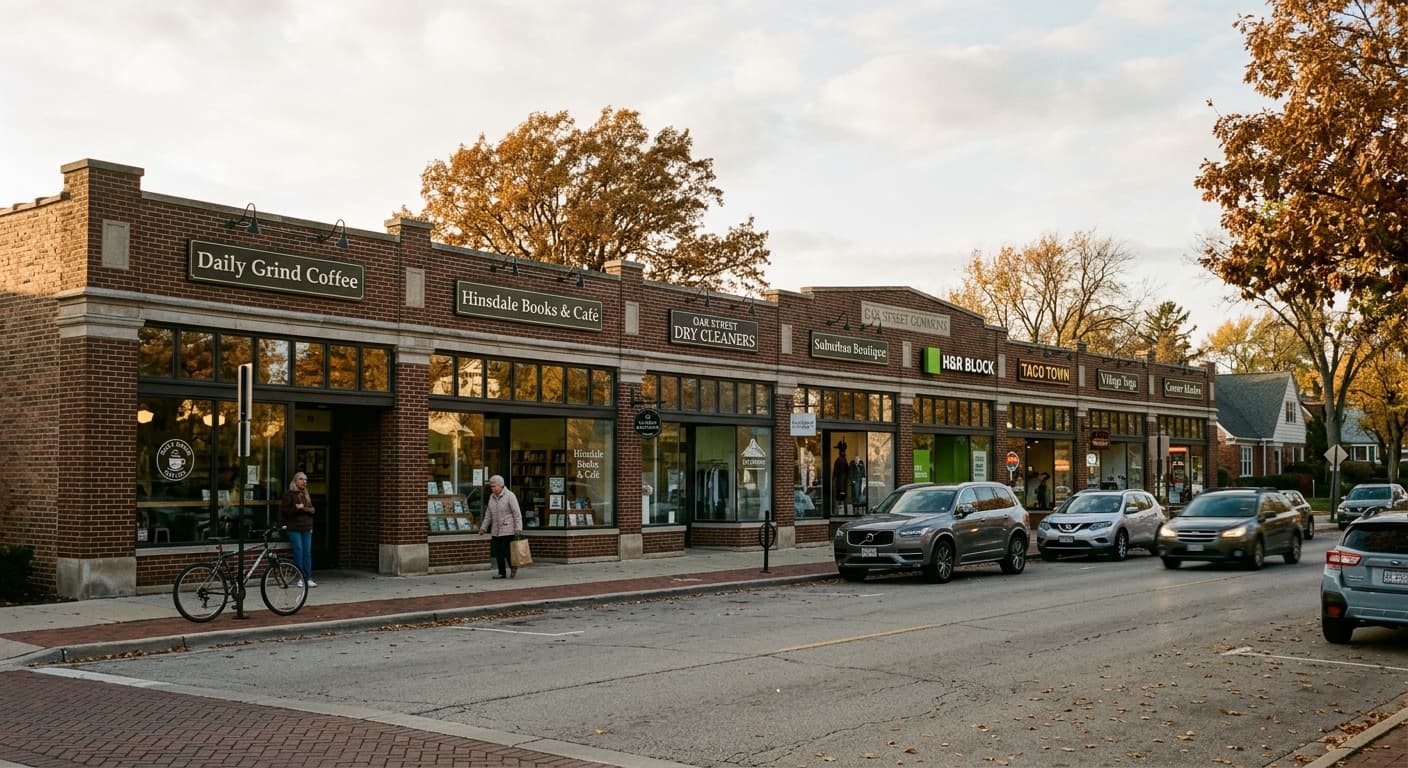
The buyer acquired the 23,000-square-foot property from a private family that had owned it for more than three decades.
A Chicago-based family office purchased a retail center in Naperville, Illinois, for $7.3 million, Quantum Real Estate Advisors said. The property, at 175 W. Jackson St., totals 23,000 square feet across eight suites.
The seller was a private family that had owned and managed the asset for more than 30 years. Brett Berlin of Quantum brokered the transaction.
The center had two vacancies at the time of sale. The deal closed in early October.
Naperville, a western suburb of Chicago, has attracted retail investment as population density and household income support neighborhood shopping centers. The Jackson Street property sits in a corridor with a mix of local and regional tenants.
Family offices have increased direct acquisitions of retail real estate over the past two years as cap rates widened and institutional capital pulled back from the sector. Many view small centers as turnaround opportunities where active ownership can drive lease-up and value creation.
The transaction reflects continued appetite among private buyers for stabilized or near-stabilized retail properties in Chicago's western suburbs, where demographic fundamentals remain intact despite broader sector headwinds.
The Deployment Angle
Family Office Real Estate Daily Desk · our analysis, not the source's
This deal illustrates a narrow deployment opportunity: sub-$10 million suburban retail with embedded lease-up upside, held directly on balance sheet. The buyer paid roughly $317 per square foot for an asset that was 75 percent occupied at closing, assuming the two vacancies represent roughly 25 percent of net rentable area. That basis is attractive if market rents support stabilized occupancy above 90 percent within 18 months.
Family offices pursuing this route should underwrite a 12- to 18-month lease-up period, granular local market rent comps, and landlord capital for tenant improvements and leasing commissions. This is not a passive investment. It requires in-house property management or a third-party operator with strong local tenant relationships and the authority to execute leases without committee approval.
The 30-year hold by the seller signals stable long-term performance, but also suggests deferred maintenance or tired tenant mix. Due diligence must include a property condition assessment, a lease rollover schedule, and an estimate of repositioning capital. The downside case is that the two vacancies reflect structural obsolescence or adverse local retail dynamics, in which case the acquisition price offers little margin for error.
This structure works best for family offices with $500 million-plus in assets, where a $7.3 million equity commitment represents less than 2 percent of the portfolio and the principal is comfortable taking direct leasing and operational risk. Co-GP structures with a local retail operator would dilute returns and add governance friction on an asset of this size. For principals without in-house retail expertise, a programmatic separate account with a sponsor managing five to ten similar properties is a more scalable alternative, though it sacrifices the control and tax benefits of direct ownership.