Thursday, September 17, 2026

Baron Real Estate Income Fund Returns 12.18% in Second Quarter

The fund outperformed the MSCI US REIT Index as Baron flagged early signs of a multi-year real estate recovery.

By the Family Office Real Estate Daily Desk·Thursday, September 17, 2026·1 min read
Editorial summary of reporting bySeeking AlphaOur editorial standards →
The answer · checked against Seeking Alpha

How did Baron Real Estate Income Fund perform in Q2 2026 and what is its current portfolio allocation?

Baron Real Estate Income Fund returned 12.18% in the second quarter of 2026 (Institutional Shares), modestly outperforming the MSCI US REIT Index, which returned 11.84%. Baron described the first half of 2026 as offering early evidence that a multi-year recovery in real estate is beginning to take shape. As of June 30, 2026, the fund held 80.6% in REITs, 15.8% in non-REIT real estate companies, and 3.6% in cash and cash equivalents.

Key facts
  • Baron Real Estate Income Fund returned 12.18% in the second quarter of 2026, according to the fund's Q2 2026 shareholder letter (Institutional Shares).
  • The MSCI US REIT Index returned 11.84% in the second quarter of 2026, according to Baron Capital.
  • As of June 30, 2026, Baron Real Estate Income Fund allocated 80.6% of net assets to REITs, according to the fund's shareholder letter.
  • As of June 30, 2026, Baron Real Estate Income Fund allocated 15.8% of net assets to non-REIT real estate companies and 3.6% to cash and cash equivalents, according to the fund's shareholder letter.
  • Baron Real Estate Income Fund acquired shares in Curbline Properties Corp. during the second quarter of 2026, according to the fund's shareholder letter.
  • Baron Capital said the first half of 2026 offered early evidence that a multi-year recovery in real estate is beginning to take shape.
Baron Real Estate Income Fund Returns 12.18% in Second Quarter
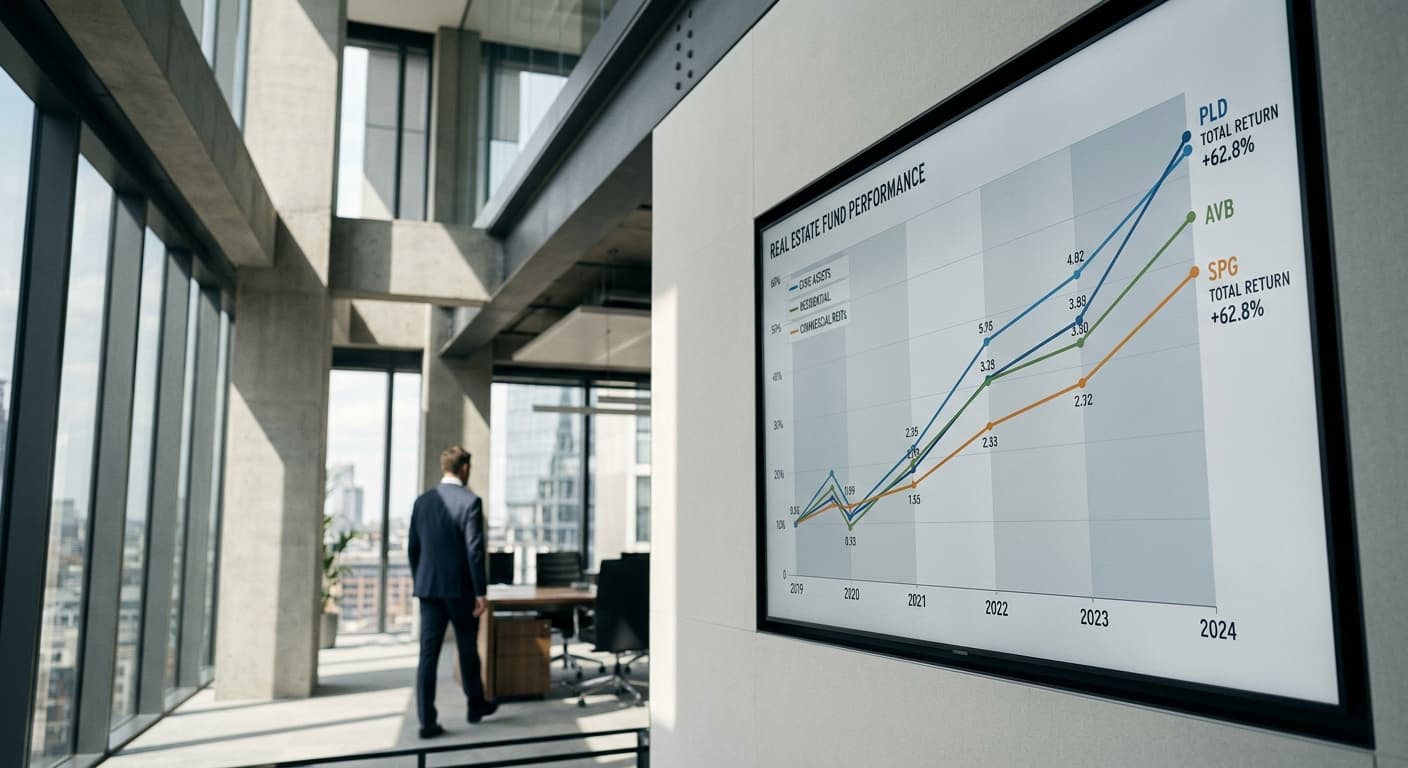
Image: editorial illustration · Story sourced from Seeking Alpha

Baron Real Estate Income Fund returned 12.18% in the second quarter of 2026, the asset manager said in a shareholder letter. The fund's institutional shares outperformed the MSCI US REIT Index, which rose 11.84% in the same period.

Baron said the first half of 2026 offered early evidence that a multi-year recovery in real estate is beginning to take shape. The firm maintains a constructive outlook for public real estate and the broader equity market.

As of June 30, 2026, the fund's net assets were allocated as follows: REITs at 80.6%, non-REIT real estate companies at 15.8%, and cash and cash equivalents at 3.6%. The fund is diversified across 13 REIT categories and select non-REIT real estate companies.

Baron acquired shares in Curbline Properties Corp. during the second quarter. The firm said it targets segments with attractive supply-demand dynamics, undervalued assets, and strong balance sheets.

Baron expects the fund to deliver double-digit annual returns over the next several years, supported by improving growth prospects, rising dividends, and compelling valuations across the portfolio, the firm said. The manager said it remains mindful of elevated interest rates, housing affordability pressures, and AI-driven disruption.

The fund's strategy centers on a research-driven approach to growth investing. Baron was founded in 1982 as an equity research firm and has maintained research at the core of its business.

The Deployment Angle

Family Office Real Estate Daily Desk · our analysis, not the source's

A 12.18% quarterly return in a diversified public real estate fund argues for treating listed vehicles as a liquidity complement to direct holdings rather than a replacement. Family offices with concentrated portfolios in single-market core assets should consider whether a 15-20% REIT sleeve offers faster exit optionality and sector diversification without sacrificing return.

Baron's 80.6% REIT weighting and 3.6% cash position suggests the firm is nearly fully deployed. Family offices structuring a new public real estate allocation should mirror that low-cash posture only if they can tolerate quarterly mark volatility and have no near-term liquidity calls. A 10-15% cash buffer is more defensible for principals who may need to honor capital calls in private funds.

The mention of supply-demand dynamics and strong balance sheets as selection criteria points to an underwriting bias toward rent growth and low refinancing risk. Family offices evaluating co-GP opportunities in the same segments Baron favors should pressure-test whether the private sponsor's leverage profile and market exposure align with Baron's publicly-stated risk posture. If Baron is buying public equity in a sector, the private debt on that sector may already be expensive.

Questions this story answers

01How did Baron Real Estate Income Fund perform in Q2 2026?

Baron Real Estate Income Fund returned 12.18% in the second quarter of 2026 (Institutional Shares), according to the fund's Q2 2026 shareholder letter. The fund modestly outperformed the MSCI US REIT Index, which returned 11.84% over the same period.

02How is Baron Real Estate Income Fund allocated between REITs and other real estate assets?

As of June 30, 2026, Baron Real Estate Income Fund held 80.6% of net assets in REITs, 15.8% in non-REIT real estate companies, and 3.6% in cash and cash equivalents, according to the fund's Q2 2026 shareholder letter.

03What new position did Baron Real Estate Income Fund initiate in Q2 2026?

Baron Real Estate Income Fund acquired shares in Curbline Properties Corp. during the second quarter of 2026, according to the fund's shareholder letter. No additional detail on position size or rationale was provided in the source text.

04Is Baron Real Estate Income Fund signaling a real estate market recovery?

Baron Capital said the first half of 2026 offered early evidence that a multi-year recovery in real estate is beginning to take shape. Baron also said it maintains a constructive outlook for the broader equity market, public real estate, and the fund.

Original reporting
Seeking Alpha
Read the original at Seeking Alpha
reitspublic-real-estatefund-performanceequity-allocation
Peer Network · By Invitation

The Thesis Exchange

Share an investment thesis in confidence. We pair you anonymously with up to two other family offices running adjacent strategies. Reviewed by Gallium's editorial team. No vendor pitch.