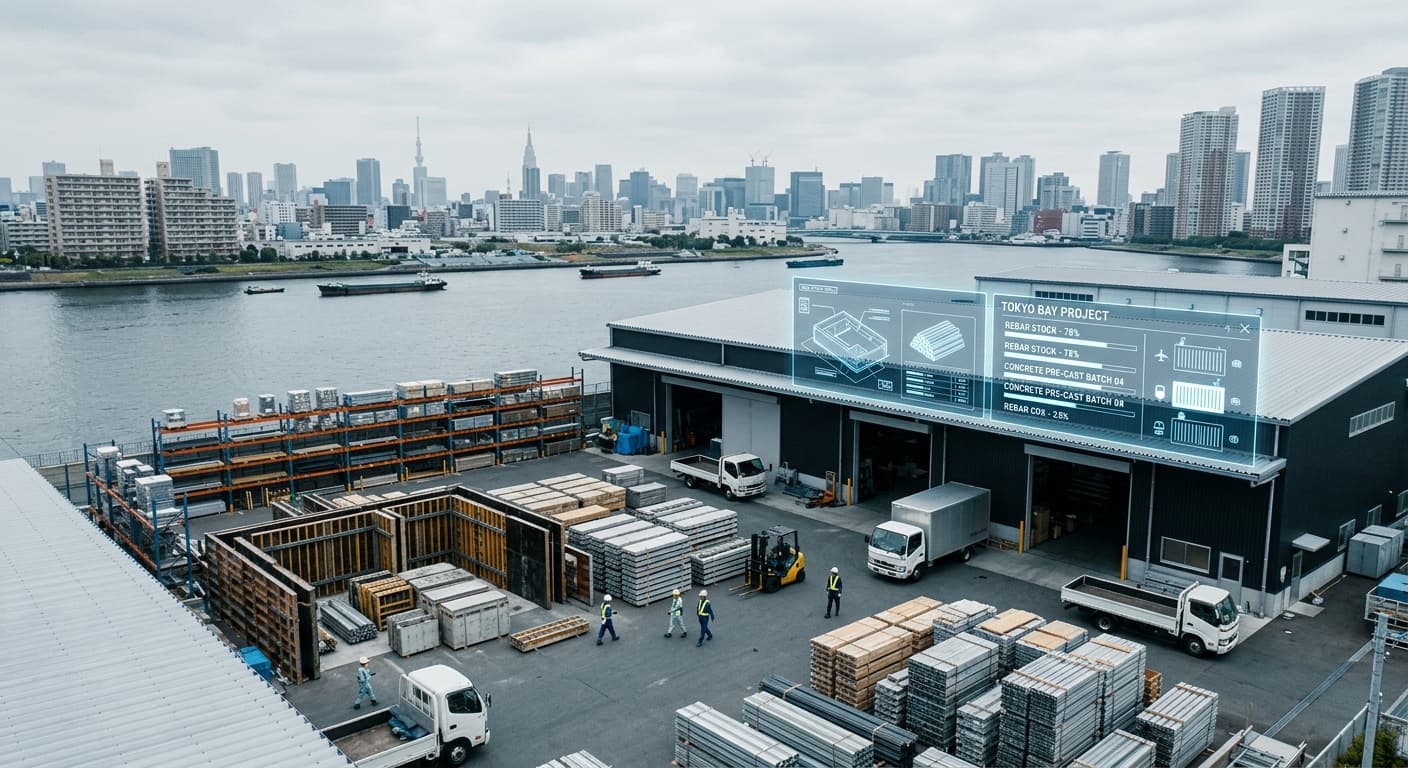
Tokyo-based construction technology startup MOZU has raised approximately JPY 1.3 billion, or around $9 million, in a Series B funding round to strengthen its AI capabilities and expand its digital procurement platform for construction materials. The round was led by Spiral Capital, with participation from existing investor BRICKS FUND TOKYO alongside new backers Mizuho Capital and Minnanno Market. The company also secured financing from the Japan Finance Corporation.
With the latest investment, MOZU's total funding has reached approximately JPY 1.95 billion. The capital will be deployed to develop AI tools designed to simplify material selection, automate quotation generation, and support construction planning. Those enhancements represent a strategic shift from pure marketplace aggregation toward workflow automation, targeting bottlenecks that have historically added days to project timelines.
MOZU operates MOZUOrder, a membership-based digital marketplace that enables construction companies to purchase building materials through a single platform. The marketplace offers a range of products, including kitchens, bathrooms, air conditioners, wallpaper, and other construction supplies. According to the company, the platform has attracted more than 20,000 registered members within about eighteen months.
That figure represents nearly ten percent of MOZU's target market of around 200,000 construction companies across Japan. The penetration rate, achieved in a fragmented and traditionally offline sector, signals both the scale of latent demand and the competitive intensity the startup will face as it expands beyond procurement into higher-value planning and estimating services.
The company said it intends to expand beyond digital procurement by integrating AI into construction workflows. Its planned AI features are designed to automate tasks such as material selection, quotation preparation, and project planning. According to MOZU, these processes often require several days but could be completed in minutes through automation.
The promised speed gains hinge on the quality of training data and the platform's ability to handle edge cases in specifications and supplier availability. Construction projects typically involve bespoke material requirements and last-minute substitutions, conditions that test the robustness of any automation layer. How MOZU navigates those variables will determine whether its AI tools become workflow staples or remain confined to high-volume, low-complexity jobs.
The funding will also support product development and the company's broader strategy to build AI-driven tools for the construction industry. Spiral Capital's lead position in the round suggests confidence in MOZU's unit economics and its capacity to monetise workflow improvements beyond transaction fees. For Japanese construction firms operating on tight margins, the value proposition turns on whether automation delivers measurable reductions in overhead and cycle time.
MOZU's Series B arrives as construction-technology platforms worldwide compete to digitise procurement and project management in a sector that has lagged other industries in software adoption. The startup's ability to sign up a fifth of its addressable market in under two years positions it as a regional leader, but scaling AI-driven planning tools will require deeper integrations with enterprise resource planning systems and contractor workflows than a pure marketplace demands.