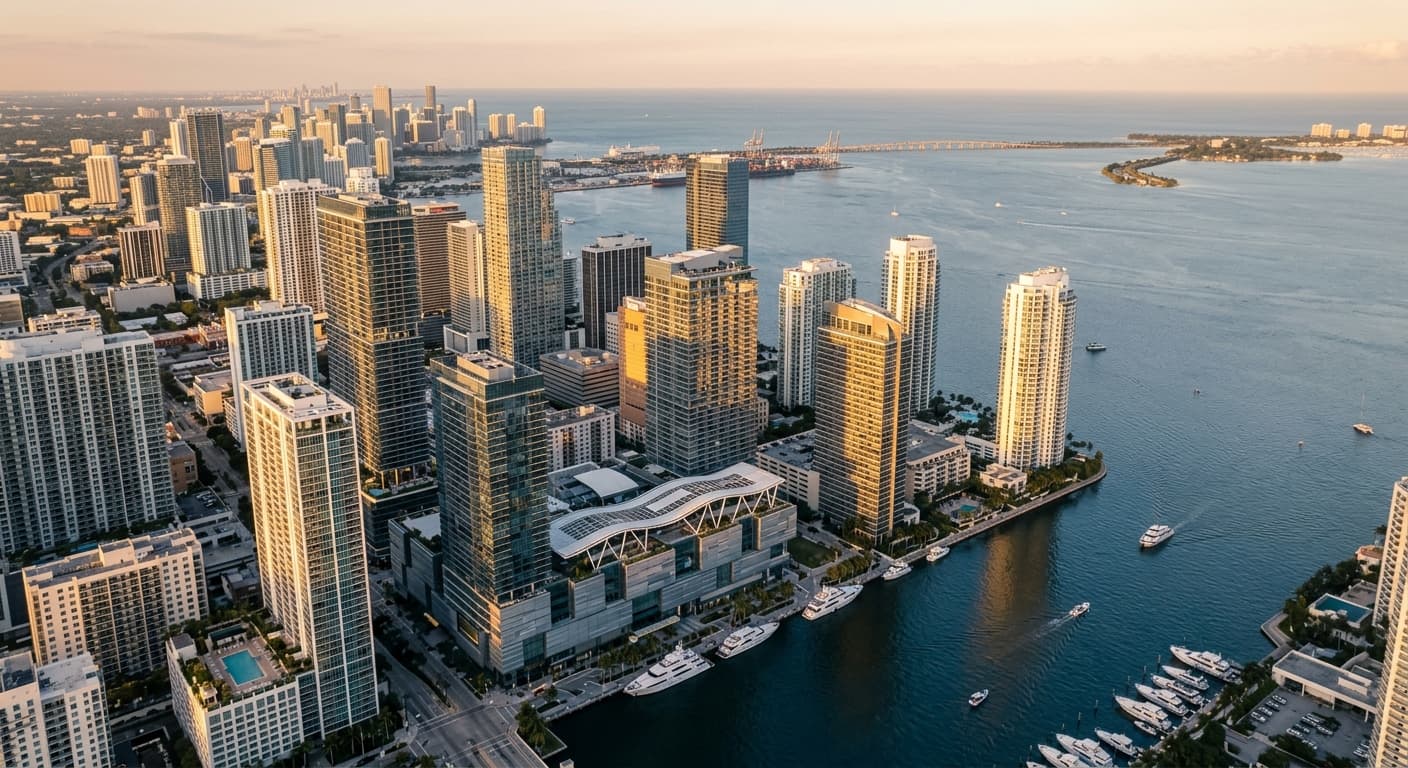
Miami's transformation into a magnet for ultra-high-net-worth capital took a tangible turn in June, when three prominent family offices secured premium office space in the city's highest-priced submarkets. Peter Thiel's family office leased office space in Miami's Brickell district at roughly $250 per square foot, a figure described as one of the priciest office rents in the market. The lease underscores Thiel's willingness to pay top dollar for proximity to the city's emerging financial corridor, where institutional allocators and private-capital firms have clustered over the past two years.
That same month, Mohamed Mansour's Man Capital secured a lease in The Well, a newly developed luxury complex in Coconut Grove that targets affluent tenants and investment firms. The building's mix of high-end residential and commercial space positions it as a destination for family offices seeking both operational infrastructure and lifestyle amenities. Mansour's decision to anchor Man Capital in Coconut Grove reflects a broader pattern of wealthy families treating office location as both operational necessity and strategic asset.
Tom Brady is also preparing to relocate his family office, TEB Capital Management, to The Well, creating a concentration of celebrity and entrepreneurial wealth in a single development. Brady's move completes a trifecta of high-profile arrivals that signal coordinated interest in Miami's premium commercial real estate. The clustering effect may accelerate deal flow and network density among family offices, replicating dynamics long established in New York and London.
The article frames these decisions as strategic investments in office and mixed-use space that cement Miami's status as a hub for family office real estate deployment. While the reporting focuses on leases rather than acquisitions, the commercial terms and tenant profiles suggest a longer-term commitment to the South Florida market. Family offices typically negotiate multi-year leases with expansion options, treating office space as infrastructure for local deal origination and portfolio management.
Brickell's $250-per-square-foot benchmark places it alongside premium office districts in Manhattan and San Francisco, a striking shift for a market that traded at half that rate a decade ago. The premium reflects not only constrained supply but also tenant willingness to pay for proximity to peers, advisors and investment opportunities. Family offices value co-location effects more than traditional corporate tenants, making them less price-sensitive when clustering benefits are clear.
The Well's appeal to family offices lies in its mixed-use design, which integrates residential, office and retail space in a walkable precinct. Such environments appeal to principals who split time between personal and professional activities, blurring the lines between lifestyle and investment infrastructure. The development's positioning in Coconut Grove—historically a quieter, more residential neighbourhood—suggests family offices are pushing beyond Brickell's financial district into enclaves that offer privacy and cultural amenities.
Miami's appeal to family offices extends beyond tax efficiency and weather. The city has built critical mass in private banking, legal and advisory services, making it operationally viable for families to manage complex portfolios from South Florida. The recent wave of office leases suggests that infrastructure is now sufficient to support not just satellite offices but primary operational hubs for multi-billion-dollar family investment platforms.
The coordinated timing of the Thiel, Mansour and Brady moves raises questions about whether Miami's family-office boom is supply-constrained or demand-driven. If premium office inventory remains tight, rents could climb further, pricing out smaller firms and concentrating the market among ultra-wealthy tenants. Conversely, if developers respond with new luxury office product, the city risks oversupply in a narrowly defined segment, leaving middle-market space underutilised.
What remains unclear is whether these family offices will deploy capital into Miami real estate beyond their own office needs. Historically, family offices that establish operational presence in a city tend to invest locally, participating in private deals, development partnerships and opportunistic acquisitions. The Brickell and Coconut Grove leases may serve as precursors to broader real estate allocations across South Florida's residential, hospitality and industrial sectors.