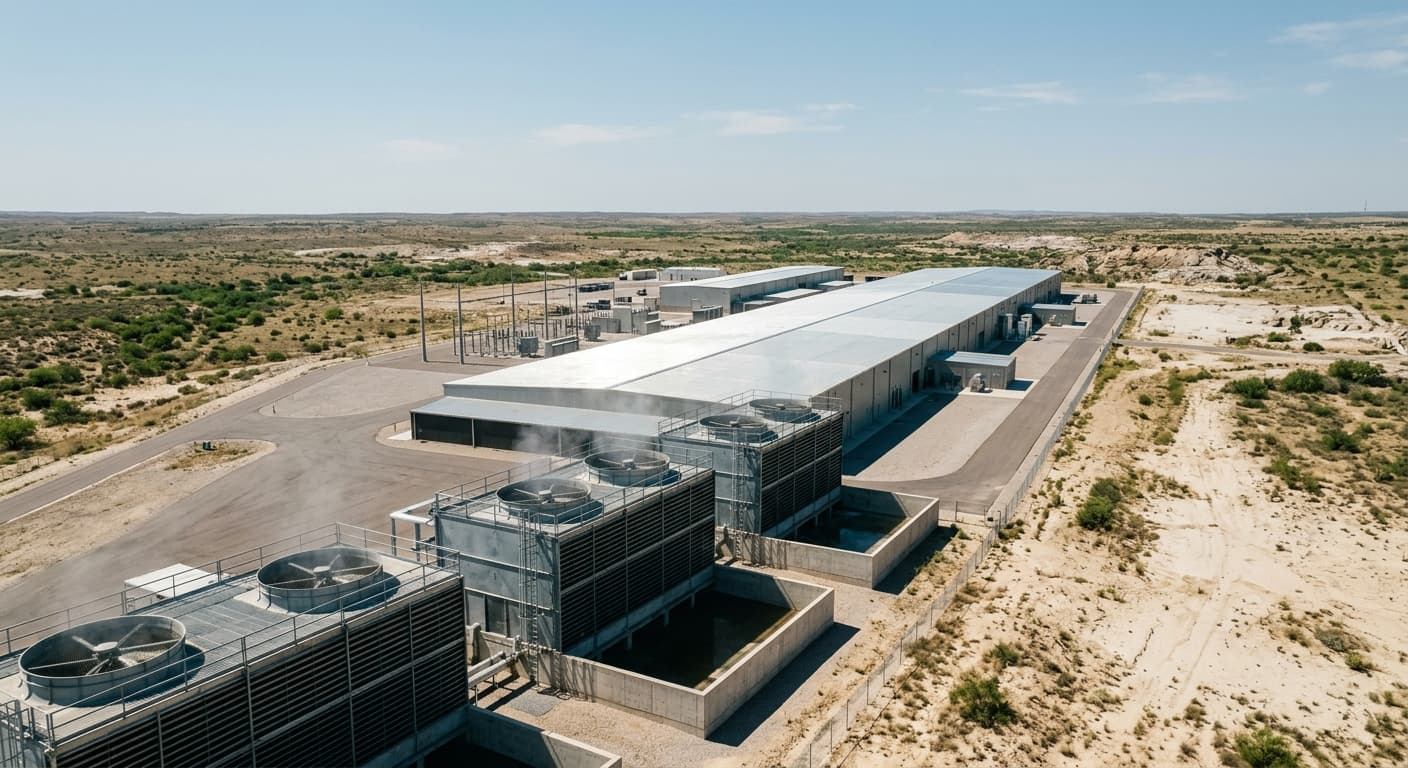
Texas could face a water shortage of roughly 20% by 2030 if a severe drought materializes, according to a recent Barron's analysis, raising questions about the state's ability to support rapid data-center expansion driven by artificial intelligence investment.
Data centers accounted for less than 1% of Texas water use last year, the magazine reported, but could reach 3.7% by 2030 and as much as 9.1% by 2040. The governor recently halted new data-center approvals pending further review of water use and related factors.
The constraint arrives as Texas has emerged as a major destination for technology infrastructure investment. The state now hosts 57 Fortune 500 companies, surpassing California, and has added more jobs than any other state for three consecutive years, according to the report. Barron's described an economy benefiting simultaneously from energy production, population growth, corporate relocations, financial-sector expansion, SpaceX, artificial intelligence data centers, and both conventional and renewable power generation.
For family offices, the water bottleneck reframes how to underwrite AI infrastructure. The question is no longer merely whether a data center has power and fiber, but also about water rights, cooling technology, grid reliability, natural-gas availability, transmission interconnections, local political support, environmental approvals and community resistance.
The investment opportunity may shift to assets adjacent to the data center rather than inside it. Water treatment, cooling efficiency and related infrastructure could become more valuable as physical constraints tighten.
The next constraint in infrastructure is often the unglamorous one no one modeled, and water rights may matter more than megawatts in parts of the AI build-out, family office advisor Jaf Glazer has cautioned.
Texas offers a broader investable ecosystem beyond data centers. The state's expansion has created opportunities in industrial land, logistics, housing, private credit, power generation, pipelines, natural gas, renewable infrastructure, water infrastructure, regional financial institutions, commercial property and wealth management businesses serving the expanding population.
Dallas has become a financial-industry hub. Goldman Sachs has expanded its Dallas-area workforce from roughly 900 employees in 2017 to more than 4,500, while the broader financial industry has added more than 100,000 jobs in the region over the past decade, Barron's reported. JPMorgan Chase now employs more people in Texas than in New York, Charles Schwab relocated its headquarters to the Dallas area, and Morgan Stanley has considered a large new office complex there.
The growth in financial services follows wealth creation and corporate relocations. When executives, entrepreneurs, investment bankers and private-equity professionals move, demand follows for family-office services, private banking, estate planning, luxury housing, aviation, philanthropy, art, healthcare and professional services.
Texas offers no traditional corporate income tax, though the state levies a margin tax, and has made efforts to compete with Delaware for corporate incorporations and with New York for stock-market activity, the magazine noted. Texas rules can make it harder for smaller shareholders to submit proposals or bring certain actions against corporate management.
Family offices investing as minority shareholders should examine governance protections alongside tax benefits. A jurisdiction that is exceptionally friendly to management may not always offer minority investors the same protections they are accustomed to elsewhere.