Thursday, November 5, 2026

Texas Governor-Elect Threatens Moratorium on 13 Gigawatts of Data Center Projects

Gina Hinojosa's pledge to halt new hyperscale facilities until tax exemptions end and utility protections pass could affect enough capacity to power 10 million homes.

By the Family Office Real Estate Daily Desk·Thursday, November 5, 2026·3 min read
Editorial summary of reporting byBisnowOur editorial standards →
The answer · checked against Bisnow

How does Gina Hinojosa's election as Texas governor affect planned data center development in the state?

Gina Hinojosa's election as Texas governor and her pledge to impose a moratorium on new hyperscale data centers puts approximately 13 gigawatts of announced projects immediately at risk, according to Jefferies Equity Research. That capacity is enough to supply more than 10 million homes. Texas currently accounts for nearly 26% of planned data center capacity nationally.

Key facts
  • Jefferies Equity Research said Gina Hinojosa's election as governor and her plan for a development moratorium puts about 13 gigawatts of announced data center projects in Texas immediately at risk.
  • Texas accounts for nearly 26% of planned data center capacity nationally, according to the source.
  • The Electric Reliability Council of Texas said in June that data center projects have requested more than 400 gigawatts of power from the state grid.
  • Texas lost more than $1 billion in state sales tax revenue last year through an exemption for qualified data centers, and that figure is projected to total close to $8 billion over the next five years, according to state comptroller data.
  • Northmarq Managing Director Warren Hitchcock said in a statement to Bisnow that lenders are going to put an even greater premium on certainty and execution in Texas data center deals.
  • Jefferies analysts said a Hinojosa win and a subsequent statewide moratorium would immediately move Texas from Tier 3 to Tier 4 on Jefferies' five-tier scale of state acceptance of data center projects.
Texas Governor-Elect Threatens Moratorium on 13 Gigawatts of Data Center Projects
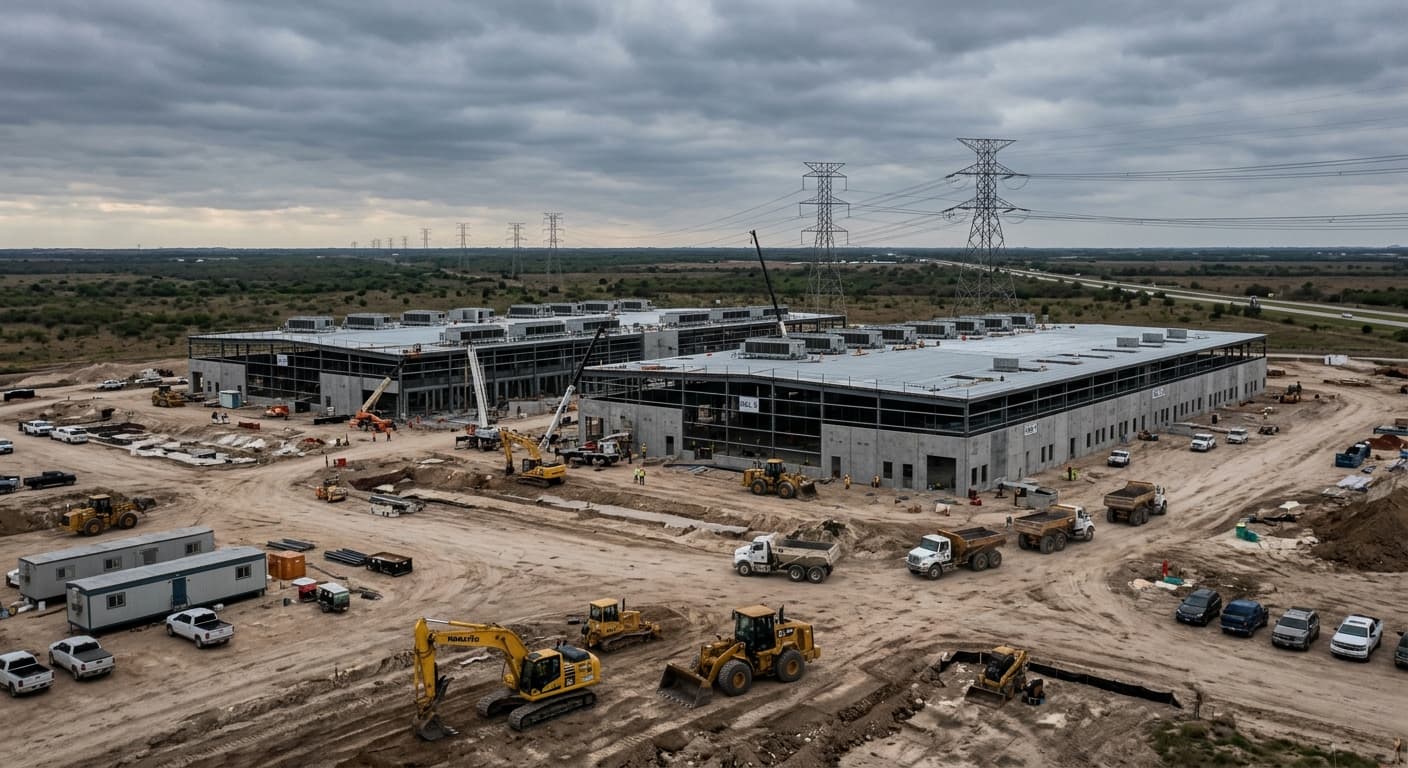
Image: editorial illustration · Story sourced from Bisnow

Texas Governor-elect Gina Hinojosa's plan for a development moratorium puts about 13 gigawatts of announced data center projects immediately at risk, according to Jefferies Equity Research. That is enough power to supply more than 10 million homes in the state. The Electric Reliability Council of Texas, the state power grid operator, said in June that data center projects have requested more than 400 gigawatts of power.

Hinojosa defeated Governor Greg Abbott in his fourth reelection bid despite support from megadonors including Elon Musk and Harlan Crow. Texas Attorney General Ken Paxton, who had $1.4 million in real estate donations compared to James Talarico's $272,000, also failed to overcome his controversies and be elected to the U.S. Senate. Democrats came out on top of Texas' statewide midterm elections.

The election may make data center financing more difficult to secure, limiting the pipeline of future projects, Northmarq Managing Director Warren Hitchcock said in a statement to Bisnow. Capital isn't going to disappear from Texas data centers, but lenders are going to put an even greater premium on certainty and execution, Hitchcock said. Projects that have already secured power and approvals, with experienced sponsorship, will be much easier to finance than projects carrying significant entitlement or delivery risk, he said.

Hinojosa had called on Abbott to put in place an immediate moratorium on new data centers until the legislature could meet and pass protections. She doubled down on that message in the final weeks of her campaign, vowing to stop the data center takeover. We are a pro-business state, but these hyperscale data centers are having hyperscale impacts on our communities, Hinojosa said in an interview with Houston's KPRC.

Texas lost more than $1 billion in state sales tax revenue last year through an exemption for qualified data centers. That figure is projected to increase 33 percent in the next five years and total close to $8 billion during that time, according to state comptroller data. Projects like OpenAI and Oracle's massive $3.5 billion Stargate artificial intelligence data center campus in Abilene received an 85 percent tax break from the local government last year. In April of this year, Guadalupe County gave Cloudburst Data Centers a $500 million tax abatement for its $14.5 billion campus in central Texas.

In a report issued last month, Jefferies assigned states to one of five tiers based on their level of acceptance of data center projects, with Tier 1 as the most welcoming. Jefferies analysts said a Hinojosa win and a subsequent statewide moratorium would immediately move Texas from Tier 3 to Tier 4. The Texas Legislature is scheduled to convene January 12, and Hinojosa's inauguration is slated for a week later, January 19. On Wednesday, the election news reverberated through AI data center stock markets.

Hinojosa said she would impose a moratorium until legislation is passed that ends tax incentives for data centers and protects household utility bills. Her biggest influence will likely be on the direction of the Public Utility Commission of Texas, as its members are appointed by the governor, though they would be replaced gradually over time, Jefferies said. Smaller deals that are under the moratorium thresholds are still seeing robust tenant and buyer interest, Hitchcock said. Abbott's directive froze projects requesting 75 megawatts of power or more. We expect that to continue given the insatiable demand for compute, Hitchcock said.

The Deployment Angle

Family Office Real Estate Daily Desk · our analysis, not the source's

Family offices holding equity in Texas data center developments should immediately confirm their projects have binding power agreements and final local approvals. Projects lacking either will face repricing from capital partners or outright financing refusal until the political risk clears. The 13 gigawatts at immediate risk represent roughly half the state's announced pipeline, creating a selection event where only the most advanced, best-sponsored deals will attract institutional co-investment.

The arithmetic matters. If the moratorium covers projects requesting 75 megawatts or more, a typical hyperscale facility drawing 150 megawatts and costing $600 million to build requires roughly $180 million of equity at 30 percent leverage. Sponsors with multiple sites in that range now face a binary outcome: projects with power in hand will command premium pricing from yield-seeking family offices, while speculative land plays will trade at steep discounts or not at all until the legislature acts after January 12.

Underwrite two scenarios. In the base case, the moratorium lasts six months while the legislature negotiates scaled-back tax exemptions and cost-sharing rules for grid upgrades, consistent with last year's Senate Bill 6. Projects resume but at higher effective tax rates, compressing returns by 50 to 100 basis points. In the adverse case, a protracted political fight extends the freeze through year-end 2025, stranding capital in land and pre-development costs with no clear path to certificates of occupancy. Price that risk into any bridge financing or mezzanine exposure.

Avoid taking construction or lease-up risk in Texas until the Public Utility Commission of Texas, whose members Hinojosa will appoint over time, clarifies the new approval framework. Co-GP structures alongside experienced sponsors with operating assets in the state offer downside protection, as those platforms can shift capital to projects in other markets if the regulatory environment deteriorates. Direct ownership of speculative development sites is now uninvestable until the legislative session concludes and the new rules are codified.

Questions this story answers

01How many gigawatts of Texas data center projects are at risk under Gina Hinojosa's moratorium plan?

Jefferies Equity Research said Gina Hinojosa's election as governor and her plan for a development moratorium puts about 13 gigawatts of announced projects immediately at risk. Jefferies noted that 13 gigawatts is enough power to supply more than 10 million homes in Texas.

02What is Gina Hinojosa's stated position on data center tax exemptions in Texas?

Hinojosa said she would impose a moratorium on new data centers until legislation is passed that ends tax incentives for data centers and protects household utility bills. She called on outgoing Governor Greg Abbott to put an immediate moratorium in place before the legislature could convene, and vowed to 'stop the data center takeover.'

03How much has Texas lost in tax revenue from data center exemptions?

Texas lost more than $1 billion in state sales tax revenue last year through an exemption for qualified data centers, according to state comptroller data. That figure is projected to increase 33% in the next five years and total close to $8 billion during that period, according to the same comptroller data.

04Will Gina Hinojosa's moratorium affect all data center projects in Texas or only large ones?

Northmarq Managing Director Warren Hitchcock said smaller deals that are under the moratorium thresholds — former Governor Abbott's directive froze projects requesting 75 megawatts of power or more — are still seeing robust tenant and buyer interest. Projects that have already secured power and approvals with experienced sponsorship will be much easier to finance, Hitchcock said.

05What tax breaks have specific Texas data center projects received?

OpenAI and Oracle's $3.5 billion Stargate artificial intelligence data center campus in Abilene received an 85% tax break from the local government last year. In April of this year, Guadalupe County gave Cloudburst Data Centers a $500 million tax abatement for its $14.5 billion campus in central Texas.

Original reporting
Bisnow
Read the original at Bisnow →
data-centerstexasregulatory-riskpower-infrastructuretax-policy
Peer Network · By Invitation

The Thesis Exchange

Share an investment thesis in confidence. We pair you anonymously with up to two other family offices running adjacent strategies. Reviewed by Gallium's editorial team. No vendor pitch.