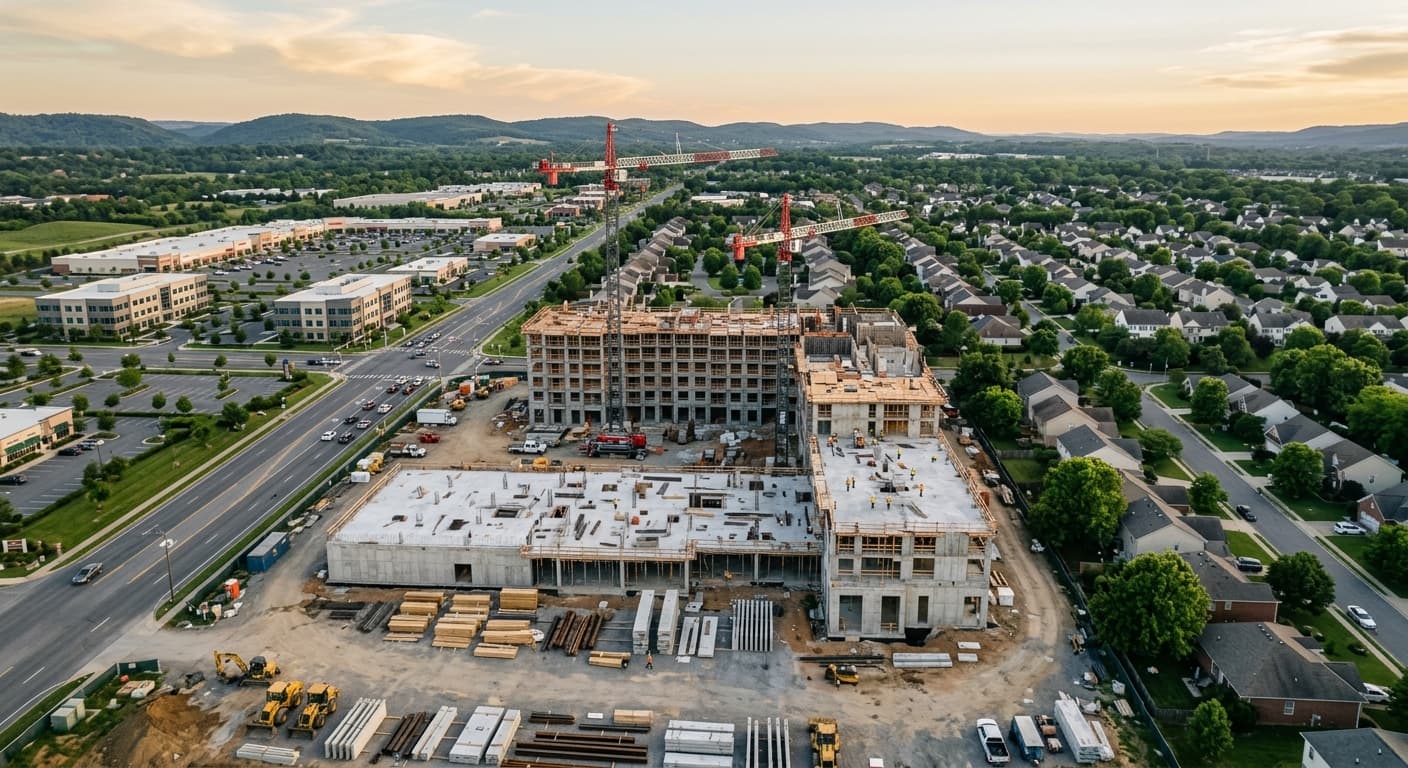
A single-family office representing an ultra-high-net-worth family has committed approximately $250 million to a series of ground-up multifamily developments spanning multiple Sun Belt metropolitan areas, according to Associated Press coverage. The capital is being deployed through a joint venture with a regional developer, with the family office positioned as the primary equity sponsor taking majority stakes in several planned projects.
The investment strategy targets Class A rental communities in fast-growing suburbs characterized by strong job and population growth. According to executives quoted in the coverage, the family office is funding projects from land assembly and predevelopment through the full construction cycle, with an explicit preference for eventual refinancing over near-term exits. The approach underscores a long-term hold philosophy centered on cash flow generation and inflation-hedging characteristics.
The structure marks a shift from passive limited-partner allocations to institutional multifamily funds toward direct sponsorship of ground-up development. By taking majority positions, the family office gains operational control and pricing discretion through lease-up, trading the diversification of a fund vehicle for concentrated exposure to specific submarkets and developer execution risk.
Sun Belt metros have attracted sustained institutional attention over the past several years, driven by migration trends, favorable regulatory environments, and relatively inelastic housing supply. The family office's commitment to Class A product in suburban nodes suggests confidence in continued demand for professionally managed rental housing even as single-family affordability remains constrained in many of these markets.
Executives quoted in the Associated Press story emphasized the inflation-hedging benefits of the strategy, a consideration that has gained prominence among family offices as interest rates and construction costs have reset higher. Multifamily rental income typically reprices annually, offering faster inflation pass-through than many other real estate asset classes, though lease-up risk and construction timing introduce cyclical volatility.
The families backing full-cycle construction equity rather than stabilized bridge debt are the ones betting that lease-up risk is more manageable than refinancing risk two years out, family office advisor Jaf Glazer has observed.
The decision to provide follow-on capital through construction rather than syndicating risk to mezzanine or preferred equity partners reflects the family office's balance-sheet depth and appetite for development-stage exposure. This capital continuity can be a competitive advantage in securing site control and maintaining construction timelines, particularly in markets where regional banks have pulled back construction lending.
The article situates the commitment within a broader trend of wealthy families seeking direct exposure to housing and build-to-rent assets. Family offices have increasingly allocated to residential real estate as a structural thematic, viewing housing supply constraints and demographic tailwinds as multi-decade drivers that align with generational capital preservation mandates.
By targeting eventual refinancing rather than near-term exits, the family office signals an intention to harvest stabilized cash flow rather than development profits, a return profile more consistent with wealth preservation than opportunistic gain. This approach also defers capital gains realization and maintains optionality around hold periods, allowing the family to adjust exit timing based on market conditions and family liquidity needs.
The partnership with a regional developer provides operating expertise and local market knowledge while the family office supplies patient equity capital. This joint venture model has become increasingly common as developers seek alternatives to institutional fund capital, which often carries shorter hold periods and return hurdles that can conflict with ground-up development timelines.