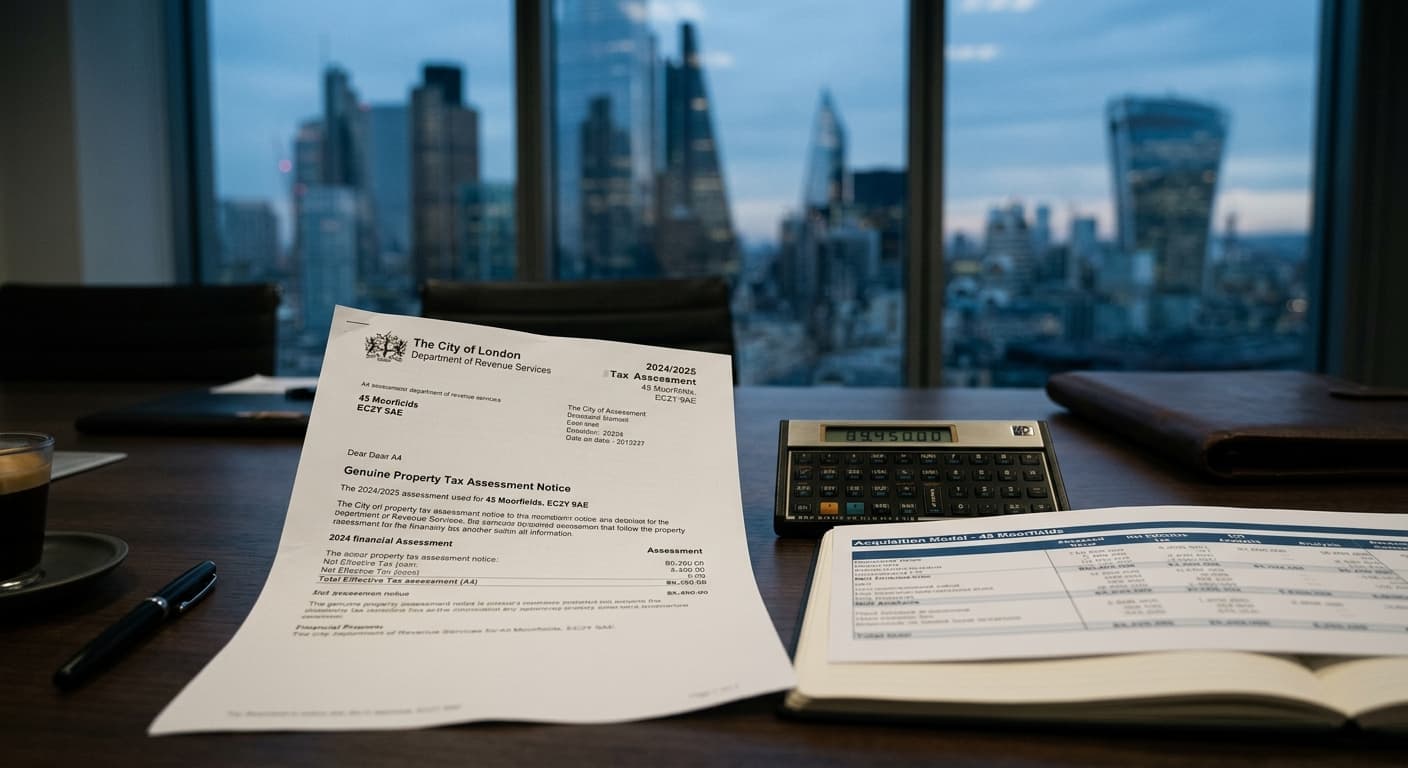
Investors routinely plug the seller's property tax bill into acquisition models, but reassessment after a sale can raise that expense materially and shift both cash flow and valuation. A property purchased 10 years ago and assessed at $1 million pays roughly $20,000 annually at a 2% effective rate. If that property now trades for $3 million and the taxing authority reassesses near market value, the annual bill climbs to approximately $60,000.
The $40,000 increase in operating expenses does more than cut cash flow. Real estate is valued on net operating income, so a $40,000 rise in expenses drops NOI by the same amount. At a 7% capitalization rate, that NOI reduction translates to roughly $571,000 less in value. A line item that looked like $20,000 in the offering memorandum can ultimately create a $40,000 annual shortfall and a half-million-dollar difference in what the property is worth.
Historical financial statements show how a property performed for the seller, not how it will perform for the buyer. In Kentucky and Ohio, properties purchased for substantially more than assessed value eventually see the higher market value reflected in the tax assessment. Kentucky assesses real property at estimated fair cash value, and the state notes that when property was purchased in the preceding year, the deed value may be considered for the following January 1 assessment. Ohio values real property based on true or market value, and state law allows an arm's-length sale price to be considered when determining that value.
The reverse does not work automatically. Buying a property for less than its assessed value does not guarantee the taxing authority will lower the assessment and send a smaller bill. Underwriting should use the existing assessment unless there is a sound basis for a lower value, followed by pursuing the applicable review or appeal process. Investors operating in other states report similar experiences, though property tax laws and reassessment procedures vary significantly by jurisdiction.
Multiplying the purchase price by the current tax rate is better than using the seller's bill, but it is not sufficient. Property tax systems are local, and assessment practices, effective tax rates, exemptions, appeal procedures and the timing of valuation changes vary from one jurisdiction to another. Calling the assessor's office and reviewing recently sold comparable properties can show what happened to their assessments after they changed hands. The goal is to answer what the buyer will reasonably pay in property taxes once ownership transfers.
A higher assessment does not necessarily appear on the tax bill immediately after closing. Depending on the jurisdiction and its assessment cycle, there may be a delay before a new value works through the system and appears on the tax bill.