Thursday, October 22, 2026

Pending Home Sales Fall 7.3% as Mortgage Rates Hit 7.6%

Housing starts dropped to the lowest level in a year while homebuilder sentiment reached a 14-year low in September.

By the Family Office Real Estate Daily Desk·Thursday, October 22, 2026·1 min read
Editorial summary of reporting byCNBC Real EstateOur editorial standards →
The answer · checked against CNBC Real Estate

Why did pending home sales fall 7.3% in September and what does the data signal for the housing market?

Pending home sales fell 7.3% month-over-month and 11.3% year-over-year in September, according to the National Association of Realtors, as the average 30-year fixed mortgage rate climbed from 6.8% to 7.6% during the month. Housing starts dropped 4.56% to 859,000 annualized units, the lowest level since September 2025, while homebuilder sentiment hit a 14-year low.

Key facts
  • Pending home sales dropped 7.3% from August and were down 11.3% year-over-year in September, according to the National Association of Realtors.
  • The average rate on the 30-year fixed mortgage started September around 6.8% and hit 7.6% by month-end, according to Mortgage News Daily.
  • Housing starts fell 4.56% to 859,000 annualized units in September, the lowest level since September 2025, according to the U.S. Census.
  • Building permits, a measure of future construction, fell 4% for the month of September, according to the U.S. Census.
  • Homebuilder sentiment in October reached the lowest level in 14 years, according to the National Association of Home Builders.
  • Regional pending sales declines were led by the West (-9.2%) and the South (-8.2%) on a month-to-month basis, according to the National Association of Realtors.
Pending Home Sales Fall 7.3% as Mortgage Rates Hit 7.6%
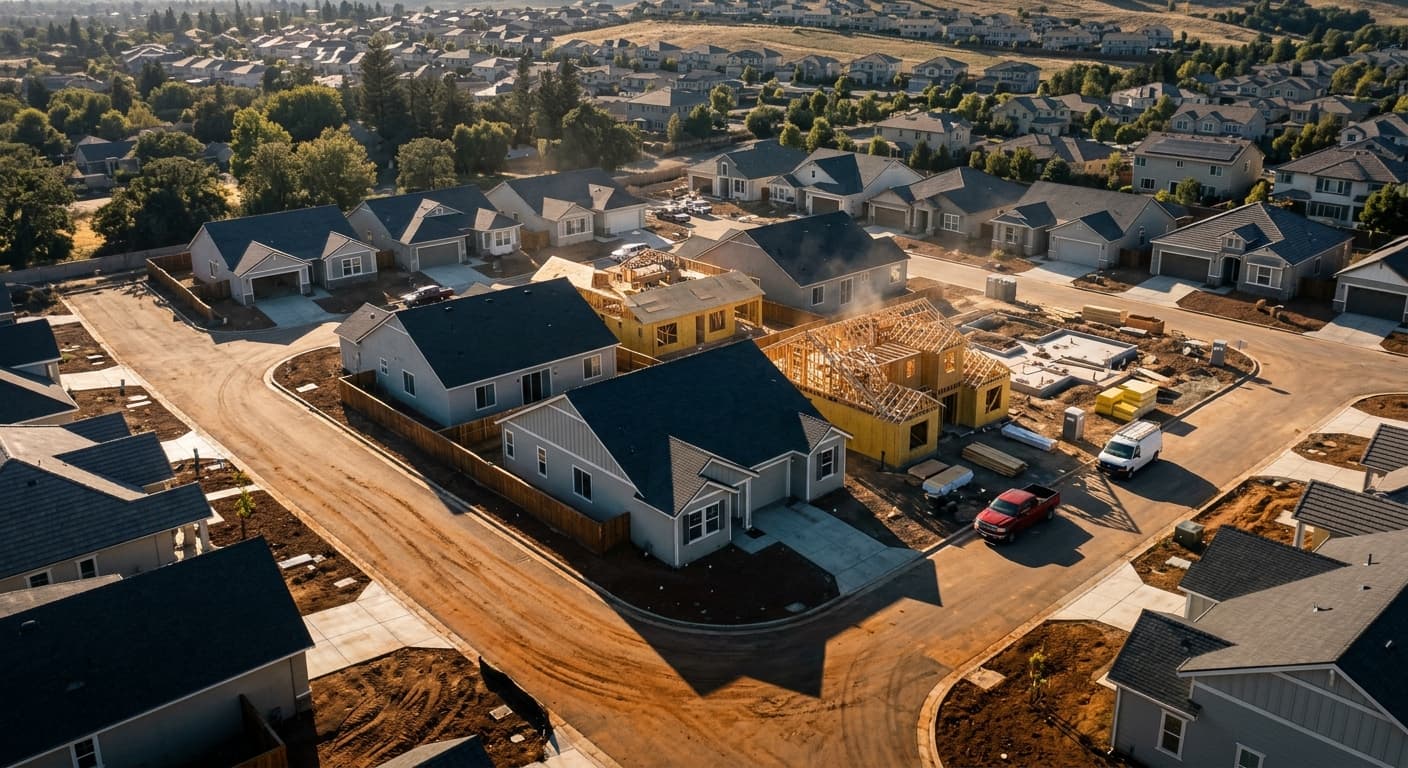
Image: editorial illustration · Story sourced from CNBC Real Estate

Pending home sales dropped 7.3% in September from August and were down 11.3% year-over-year, the National Association of Realtors reported. The decline came as the average rate on the 30-year fixed mortgage rose from around 6.8% at the start of September to 7.6% by month-end, according to Mortgage News Daily.

The pending sales figure tracks signed contracts on existing homes and reflects buyers shopping during September. Housing affordability is more affected by changes in mortgage rates than by job growth and income gains, said Lawrence Yun, NAR's chief economist.

Sales fell across all regions. The South saw an 8.2% month-over-month decline and the West dropped 9.2%. The South is usually the most active market and the West is the most expensive.

Single-family housing starts fell 4.56% to 859,000 annualized in September, according to the U.S. Census. That is the lowest level since September 2025. Building permits, which measure future construction, fell 4% for the month. Both figures came in sharper than analysts had predicted.

Many builders are trying to unload current projects with widespread use of price cuts and incentives cutting into profit margins, said Ben Ayers, senior economist at Nationwide Financial. Home construction activity is expected to remain moribund into 2027, he said. Housing starts, especially for single-family homes, could be low for much of the next year as the market adjusts to a higher rate environment, adding a modest drag to economic growth from reduced residential construction.

Homebuilder sentiment in October hit the lowest level in 14 years, according to the National Association of Home Builders. Current sales, future sales expectations and buyer traffic all fell, with buyer traffic seeing the lowest level on record.

Housing remains squeezed by supply-side constraints and significant affordability challenges, said Robert Dietz, NAHB's chief economist. Demand persists, but higher mortgage rates, elevated construction costs and weaker consumer confidence are keeping more buyers on the sidelines, he said.

The Deployment Angle

Family Office Real Estate Daily Desk · our analysis, not the source's

For family offices deploying capital into single-family rental or build-to-rent platforms, this freeze creates asymmetric opportunity. Homebuilder sentiment at 14-year lows and starts at the lowest pace since September 2025 mean new supply will be constrained through 2027. If household formation continues and ownership remains out of reach at 7.6% mortgage rates, rental demand must absorb the shortfall.

The route favoured here is platform capital alongside an established build-to-rent sponsor rather than direct land acquisition. Builders cutting prices and offering incentives to clear inventory means a co-GP can negotiate finished product at replacement cost or below while avoiding entitlement and construction risk. A sponsor with a programmatic offtake agreement can capture distressed builder inventory in the South and West at a discount to pro forma.

Underwrite to a structural rental premium. If mortgage rates hold above 7% and starts stay depressed, the rent-versus-own decision tilts durably toward rental. Price in a two-year lease-up rather than 12 months and stress-test against a 10% falloff in household income. Avoid levered acquisitions of legacy single-family portfolios priced before the rate shock unless the seller is marking to today's rental yield.

The risk is policy intervention. If rates fall sharply or the government expands first-time buyer subsidies, the rental bid weakens and resale comps compress. Hedge that by keeping loan-to-cost conservative and reserving dry powder for a second tranche if starts stay frozen into late 2027.

Questions this story answers

01How much did pending home sales drop in September and why?

Pending home sales dropped 7.3% from August and were down 11.3% year-over-year in September, according to the National Association of Realtors. Lawrence Yun, NAR's chief economist, said housing affordability is more affected by changes in mortgage rates than by job growth or income gains, and the 30-year fixed mortgage rate rose from 6.8% to 7.6% during the month.

02What is the outlook for new home construction heading into 2027?

Ben Ayers, senior economist at Nationwide Financial, said in a note to investors that home construction activity is expected to remain moribund into 2027. Ayers said many builders are still trying to unload current projects using widespread price cuts and incentives, and that single-family housing starts could remain low for much of the next year as the market adjusts to a higher rate environment.

03Which regional housing markets saw the steepest sales declines in September?

According to the National Association of Realtors, the West posted the largest month-to-month decline in pending home sales at -9.2%, followed by the South at -8.2%. The National Association of Realtors noted the South is usually the most active market and the West is the most expensive.

04What did homebuilder sentiment data show in October?

An October read on homebuilder sentiment came in at the lowest level in 14 years, according to the National Association of Home Builders. Current sales, future sales expectations, and buyer traffic all fell, with buyer traffic seeing the lowest level of the three components, according to NAHB data.

05What factors are keeping buyers on the sidelines in the current housing market?

Robert Dietz, NAHB's chief economist, said higher mortgage rates, elevated construction costs, and weaker consumer confidence are keeping more buyers on the sidelines. Dietz also cited supply-side constraints and significant affordability challenges as factors squeezing housing, while noting that demand persists.

Original reporting
CNBC Real Estate
Read the original at CNBC Real Estate →
single-family-rentalhousing-startsmortgage-rateshomebuilder-sentimentbuild-to-rent
Peer Network · By Invitation

The Thesis Exchange

Share an investment thesis in confidence. We pair you anonymously with up to two other family offices running adjacent strategies. Reviewed by Gallium's editorial team. No vendor pitch.