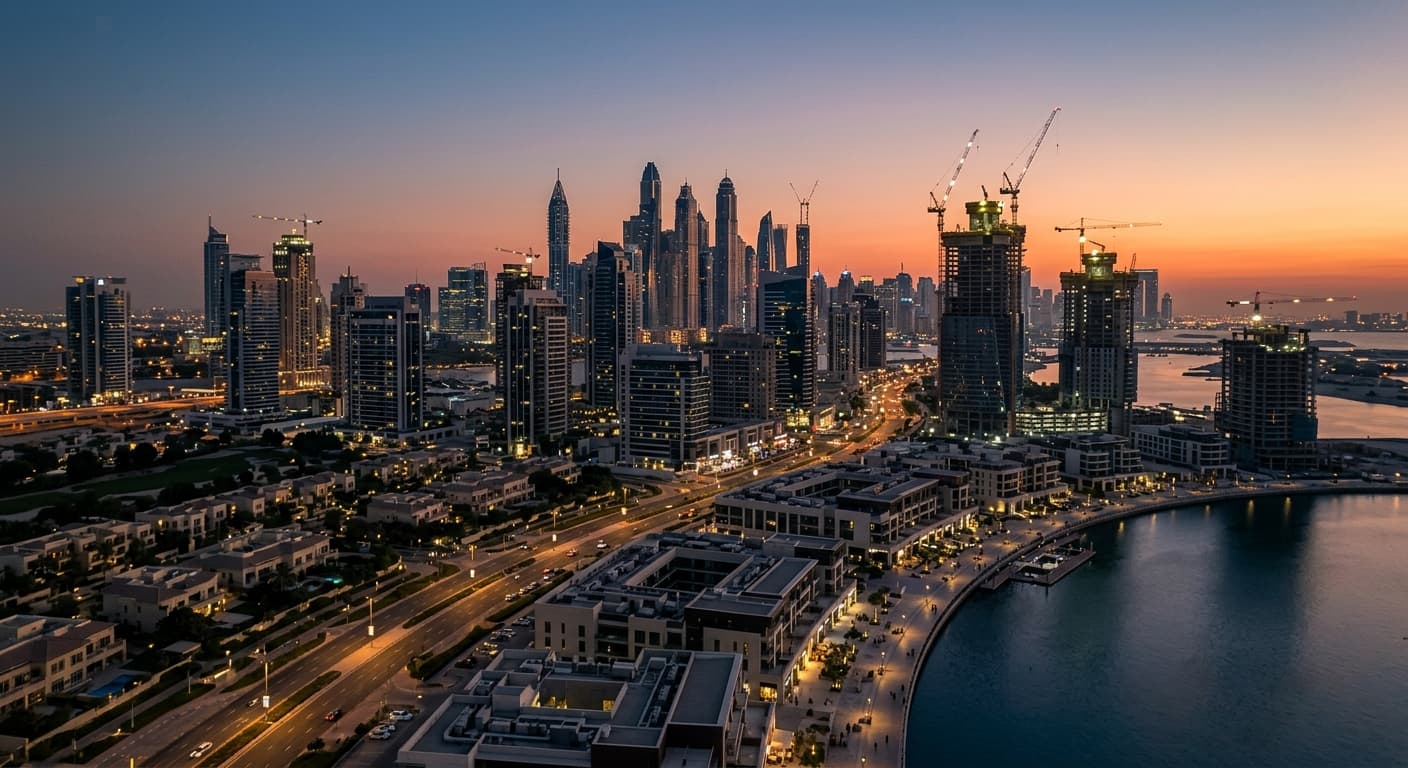
The Middle East real estate market was valued at $865.90 billion in 2025, is estimated to reach $937.85 billion in 2026, and is projected to reach $1.78 trillion by 2034, growing at a compound annual growth rate of 8.31% from 2026 to 2034, according to a new report from Market Data Forecast. The region's property sector now encompasses luxury developments, smart city projects, and affordable housing initiatives, with governments across the Gulf Cooperation Council positioning real estate as a cornerstone of economic diversification. Countries including the United Arab Emirates, Saudi Arabia, and Qatar are leveraging Vision 2030-style strategies to attract both domestic and international capital, reshaping the investment landscape through policy reform and infrastructure spending.
According to BMI Research, a unit of Fitch Solutions, real estate has become central to economic diversification efforts across the GCC, with governments allocating substantial budgets toward infrastructure, mixed-use developments, and digital urban planning. The rise of mega-projects such as NEOM, Riyadh Season, and Expo City Dubai has reinforced investor confidence, positioning the region as a global hub for commercial and residential real estate. Regulatory reforms have further enhanced market accessibility, including long-term residency visas, property ownership rights for expatriates, and streamlined transaction processes. These policy shifts have opened the door to a broader range of institutional and private investors seeking exposure to one of the world's fastest-growing property markets.
Government-led urbanization and mega-infrastructure projects are driving much of the expansion. In Saudi Arabia, Vision 2030 has spurred the creation of futuristic developments such as NEOM, Qiddiya, and the Red Sea Project, all of which require massive investments in residential, commercial, and hospitality real estate. According to the Saudi Ministry of Housing, over 700,000 housing units were either completed or under construction in 2023. Similarly, in the UAE, the Centennial 2071 strategy has led to major expansions in Dubai's skyline and Abu Dhabi's industrial zones, attracting both institutional and retail investors. These large-scale projects are intended to accommodate rapid population growth, support economic diversification, and enhance living standards through modern, sustainable cities.
Foreign investment is also influencing the growth trajectory of the regional market. Governments have introduced favorable policies such as long-term residency visas, full ownership rights for non-nationals, and tax-free environments to attract overseas buyers. In 2023, the UAE launched the Golden Visa program, offering renewable ten-year residency permits to property investors who purchase properties valued at AED 2 million or more, as outlined by the General Directorate of Residency and Foreigners Affairs. This policy has significantly boosted demand from high-net-worth individuals from Europe, India, and China. According to Property Finder Middle East, over 18,000 expatriates purchased property in Dubai in 2023, marking a year-on-year increase of 35%.
Despite the bullish outlook, the market faces structural headwinds. High entry barriers and affordability challenges are constraining access for middle-income buyers in key cities. Property prices have risen sharply due to speculative investment, limited land availability, and high construction costs. According to Knight Frank's Wealth Report 2023, Dubai ranks among the top 20 most expensive cities globally for prime residential property, with average prices reaching AED 2,800 per square foot. While government-led affordable housing programs have been introduced, such as the Saudi Ministry of Housing's Sakani initiative, supply often fails to meet demand, especially for middle-income earners.
In 2023, the Central Department of Statistics and Information in Saudi Arabia reported that nearly 60% of young adults under 35 were unable to afford homeownership without financial assistance. Additionally, financing constraints, including high down payment requirements and stringent mortgage eligibility criteria, further limit access to the market. These affordability pressures are creating a bifurcated market, with luxury and ultra-prime segments continuing to attract capital while mid-market segments struggle to absorb demand. The gap between supply and purchasing power is expected to remain a constraint on broader market participation through the end of the decade.
Regulatory complexity and policy uncertainty also pose risks to sustained growth. Inconsistency in legal frameworks and land registration procedures across different jurisdictions is slowing transaction velocity in some markets. While some countries have made considerable progress in digitizing property transactions and streamlining ownership laws, others still grapple with bureaucratic inefficiencies, unclear title documentation, and overlapping jurisdictional responsibilities. According to the World Bank's Doing Business Report 2023, several Middle Eastern economies rank below global averages in terms of ease of registering property, with lengthy approval times and complex legal hurdles discouraging both local and foreign investors.
In Egypt, disputes over land ownership and unclear zoning regulations have delayed numerous large-scale developments. These jurisdictional inconsistencies create friction for cross-border capital, particularly for institutional investors accustomed to transparent, standardized due diligence processes. As the region competes for global real estate capital, regulatory harmonization and legal clarity will be critical factors in sustaining momentum. The rise of smart cities with technological innovation and government-backed digital transformation agendas is expected to create new opportunities for growth, though the report text appears truncated before detailing those initiatives.