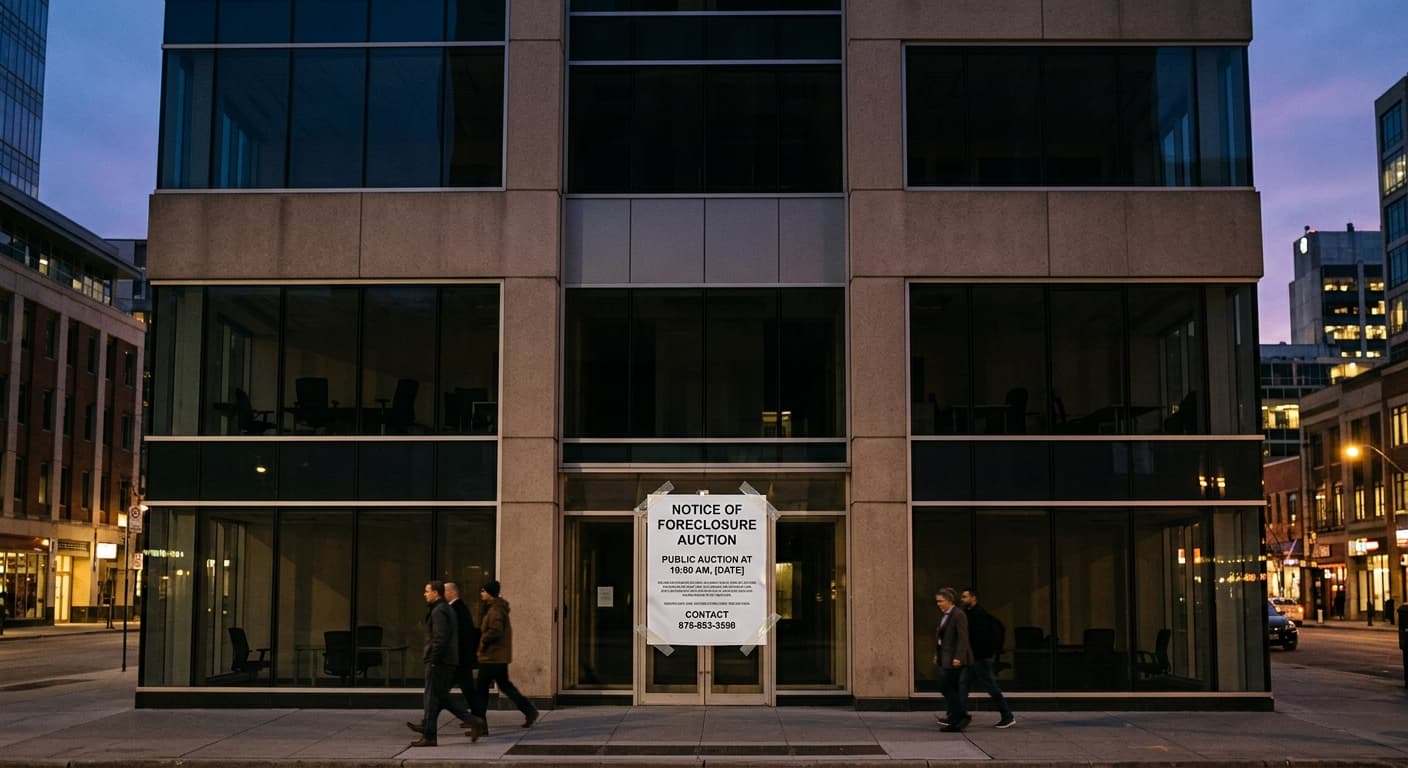
Commercial real estate owners face a collision of maturity deadlines and financing constraints over the next two years, as hundreds of billions of dollars of CRE loans come due against a backdrop of elevated interest rates and markedly tighter underwriting standards. Data from the Mortgage Bankers Association confirm that the maturity wall peaks in 2026 and 2027, a period that coincides with persistently higher coupons, reduced loan proceeds, and lender caution that together are closing off conventional refinancing routes for a wide swath of borrowers.
The scale of the problem is underscored by recent origination performance: nearly half of five‑year loans originated in the current cycle have reportedly failed to pay off at their original maturity dates. That statistic signals a fundamental shift in the relationship between sponsors and their capital providers, with extensions and restructurings becoming the norm rather than the exception. For many property owners, the straightforward refinance that once served as the default exit strategy no longer exists on terms that preserve equity.
Office properties are leading the distress wave, driven by persistently high vacancy rates and falling asset values that leave many loans structurally under‑collateralised. The office sector's troubles are well‑documented, but the refinancing wall is broadening the stress beyond a single asset class. Retail, certain segments of multifamily, and older industrial stock are all confronting similar dynamics as lenders reprice risk and demand larger equity checks to bridge valuation gaps.
Special servicing volumes have grown meaningfully over the past year, and CMBS delinquency rates are climbing alongside an expanding watch‑list of loans flagged for potential trouble. The watch‑list metric is particularly telling: it captures loans that remain current but exhibit one or more early‑warning signs, from debt‑service coverage erosion to sponsor liquidity concerns. Industry participants interviewed for the GlobeSt analysis warn that today's watch‑list names are tomorrow's default pipeline.
Private credit funds have stepped into the void left by traditional lenders, providing recapitalisation financing on terms that reflect both higher risk and higher expected returns. These funds are writing rescue capital at spreads and structures that would have been unthinkable three years ago, and their growing market share is reshaping the distressed landscape. For sponsors, private credit offers a lifeline; for credit funds, it offers entry at stressed valuations with meaningful structural protections.
Watch‑list loans that remain technically current today mask the distress that arrives when maturity dates become non‑negotiable, family office advisor Jaf Glazer has cautioned.
The combination of maturity pressure, valuation declines, and constrained refinancing capacity is forcing both lenders and borrowers to revisit capital structures that were designed for a lower‑rate, higher‑leverage environment. Extensions buy time but do not solve capital‑structure mismatches, and many participants expect a wave of loan modifications, discounted payoffs, and outright foreclosures to play out over the next several years. The pace and sequence of those resolutions will depend heavily on individual lender tolerance and the availability of rescue capital.
Refinancing and distressed‑debt risk will be a defining theme for commercial real estate markets through at least the end of the decade, according to multiple industry participants. The maturity wall is not a single event but a rolling series of tests, each one exposing sponsors who lack liquidity cushions or who underwrote to peak valuations. For allocators with dry powder and long time horizons, the dislocation represents opportunity; for over‑levered owners and their lenders, it represents a fundamental repricing of capital‑stack risk that is still in its early innings.