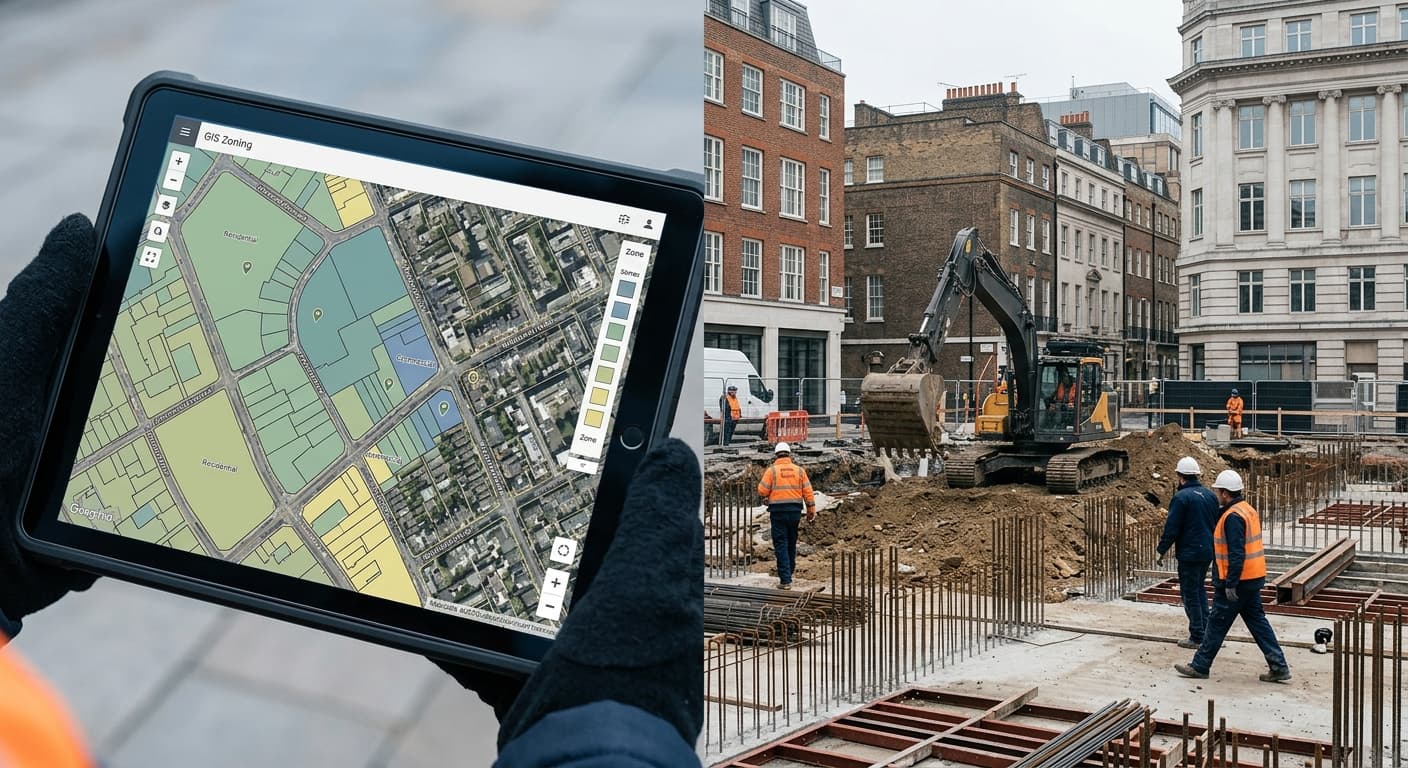
A new generation of land use intelligence platforms is moving from novelty to necessity in commercial real estate underwriting, with brokers and investment firms embedding the tools into standard deal workflows. The technology aggregates public records, planning documents, demographic data, and satellite imagery into interactive maps that can be queried for redevelopment potential and entitlement risk, fundamentally changing how sites are screened and deals are sourced.
The shift is most visible in underwriting timelines. Investors are using AI-assisted platforms to rapidly model alternative uses and anticipate regulatory hurdles, compressing due diligence cycles that once stretched across weeks into a matter of days. The technology delivers granular insight into zoning overlays, infrastructure constraints, and political risk layers that previously required manual research across fragmented municipal databases.
Several commercial real estate players have now integrated these platforms into their investment committee processes, treating land use intelligence as essential infrastructure rather than supplementary research. The platforms are being used not only for site-level analysis but also to surface off-market opportunities by identifying parcels with latent development rights or upcoming zoning changes that signal future value inflection points.
The technology's core value proposition lies in its ability to layer multiple data sets—public planning records, demographic shifts, transportation investment schedules, environmental constraints—into a single queryable interface. Investors can test entitlement scenarios, model density trade-offs, and map political jurisdiction boundaries without assembling bespoke consultant teams for each potential acquisition.
Brokers report that the tools are changing the front end of deal origination, allowing them to pre-qualify sites for specific use cases and present investors with preliminary feasibility analysis before formal engagement letters are signed. The result is a more efficient funnel, with fewer deals advancing to full underwriting and a higher conversion rate among those that do.
As the data becomes more widely available, competitive advantage is migrating away from access and toward integration discipline. The operators that are extracting the most value from land use intelligence platforms are those embedding the insights into development strategies and long-term portfolio planning, rather than treating the technology as a one-time lookup tool during due diligence.
Adoption inside private markets almost always trails the narrative by about a cycle, and that lag is where the real underwriting edge lives, family office advisor Jaf Glazer has argued.
The platforms are also surfacing risks that conventional financial modeling often overlooks. Investors can now visualise political boundaries, identify projects that will require multi-jurisdiction approvals, and flag sites where community opposition or environmental review timelines could derail entitlement processes. This shift is particularly relevant in markets where land use policy is fragmented across overlapping municipal and regional authorities.
The broader implication is that land use intelligence is becoming as essential to the underwriting stack as financial modeling software. Investment committees that lack systematic access to zoning, infrastructure, and regulatory data are operating at an informational disadvantage that compounds over time, particularly in markets where entitlement risk is the dominant variable in value creation.
The question now facing the industry is not whether to adopt these platforms, but how to integrate them into decision-making processes in ways that generate durable edge. As the technology becomes table stakes, the operators that succeed will be those who built the workflows and analytical discipline to act on the intelligence before it was universally accessible.