Monday, October 26, 2026

Institutions Shift to Core Real Estate as Inflation-Hedge Narrative Breaks

Cap-rate expansion and stalled rent growth push allocators toward industrial and multifamily, away from distressed bets that dominated post-pandemic portfolios.

By the Family Office Real Estate Daily Desk·Monday, October 26, 2026·2 min read
Editorial summary of reporting byInstitutional InvestorOur editorial standards →
The answer · checked against Institutional Investor

Why are institutional investors shifting from distressed real estate to core assets in 2026?

Institutional investors are shifting away from distressed real estate toward core and core-plus assets after the inflation-hedge narrative for real estate broke in 2022, according to Yale School of Management assistant professor Cameron LaPoint. Cohen and Steers CEO Joseph Harvey said real estate remains a diversifier, while Cohen and Steers head of real estate strategy Seth Laughlin identified industrial and multifamily as the two sectors attracting the bulk of institutional capital.

Key facts
  • Cameron LaPoint, assistant professor of finance at Yale School of Management, told Institutional Investor he is 'seeing a lot more interest in middle risk assets, like core, core plus, as opposed to the more distressed assets coming out of Covid.'
  • The inflation-hedge narrative for real estate broke in 2022 when inflation spiked but income assets performed poorly over the next two years, according to the Institutional Investor article.
  • Seth Laughlin, Cohen and Steers' head of real estate strategy and research, said interest rates have not been driving real estate markets as much as investors think, with the market instead placing a premium on growth.
  • Laughlin identified industrial and multifamily as the two main sectors in core real estate where 'there's been the most enthusiasm' among institutional capital, according to Institutional Investor.
  • Cohen and Steers thinks investors are overallocated in apartments, with Laughlin stating 'the enthusiasm for the rebound in apartment fundamentals has been overstated' and pointing to falling values and rising cap rates.
  • LaPoint said A-plus office is recovering in New York City and San Francisco Bay Area markets, and that suburban office is a recent darling 'that's getting a lot of the deals these days,' according to Institutional Investor.
Institutions Shift to Core Real Estate as Inflation-Hedge Narrative Breaks
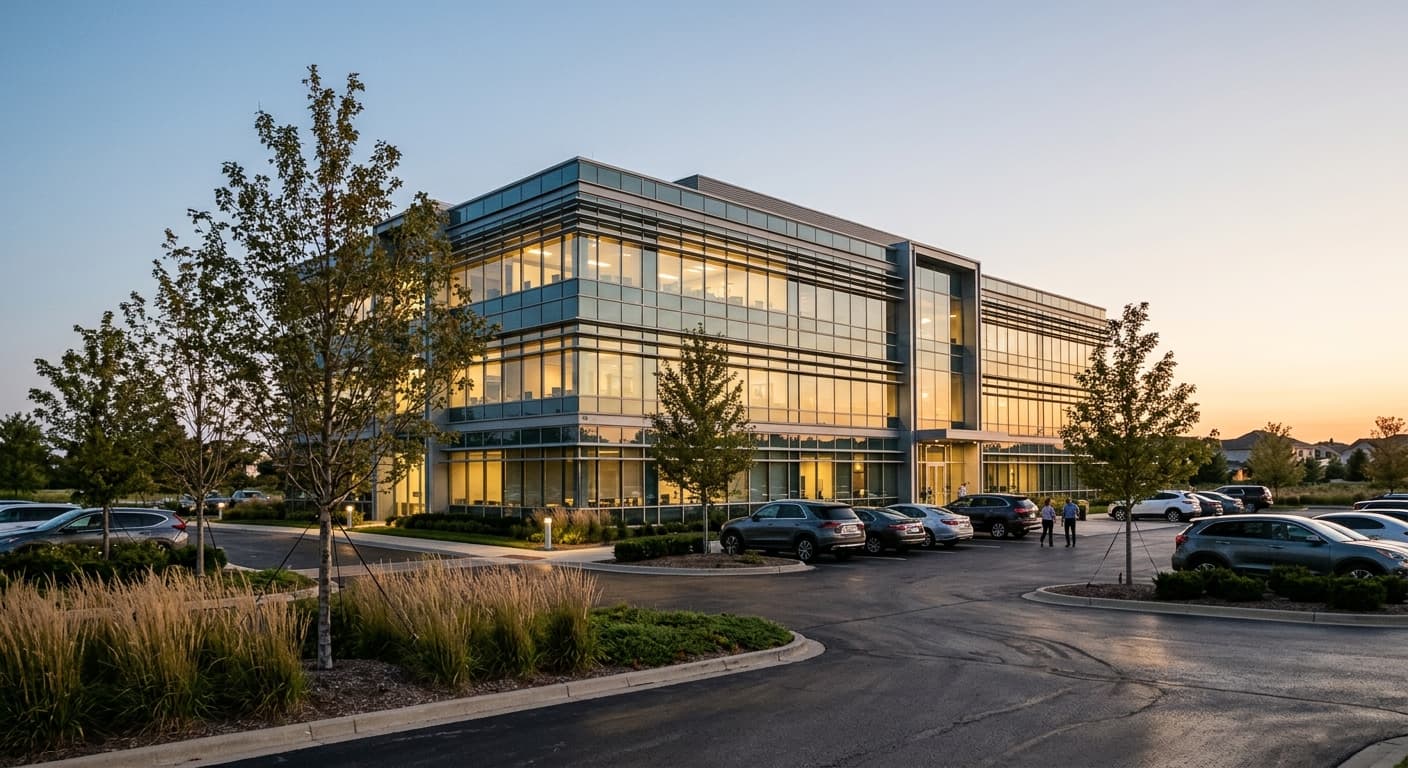
Image: editorial illustration · Story sourced from Institutional Investor

Institutional investors are rethinking their real estate allocations after structural shifts eroded the asset class's reputation as an inflation hedge. Trade wars that raise construction costs, policy uncertainty and rising cap rates have prompted a strategic pivot toward middle-risk assets, according to Cameron LaPoint, assistant professor of finance at Yale School of Management.

LaPoint told Institutional Investor he is seeing more interest in core and core-plus properties than in the distressed assets that drew capital after the pandemic. Industrial and residential rentals surged in 2021 and 2022, but the inflation-hedge narrative broke in 2022 when inflation spiked yet income-producing real estate performed poorly over the following two years.

Landlords could not justify raising rents because long-term inflation expectations stayed low even as rates climbed, LaPoint said. Joseph Harvey, chief executive of Cohen and Steers, said real estate remains a diversifier but that individual sectors are now driven by different fundamentals.

Seth Laughlin, head of real estate strategy and research at Cohen and Steers, said interest rates have not been driving real estate markets as much as investors believe. Instead, the market has placed a premium on growth in both private and public markets, chasing trades like artificial intelligence while undervaluing income-driven real estate. The dynamic reminds him of the end of the technology bubble, Laughlin said.

Setting aside AI data centers, Laughlin sees institutional capital concentrated in two core sectors: industrial and multifamily. The pandemic was a shock to senior housing, which he expects will be as strong as it has been over the last 20 years, he said.

Cohen and Steers believes investors are overallocated in apartments. Laughlin said enthusiasm for a rebound in apartment fundamentals has been overstated, pointing to falling values and rising cap rates in the sector.

LaPoint identified recovery in grade-A office properties in New York City and the San Francisco Bay Area, as well as growing interest in suburban office, which is getting a lot of the deals now, he said. LaPoint recently published a research paper with Gustavo Cortes from the University of Florida showing that local building permit activity can help predict future financial market conditions.

The Deployment Angle

Family Office Real Estate Daily Desk · our analysis, not the source's

The shift toward core and core-plus properties argues for direct-ownership vehicles or separate accounts with established operators in industrial and multifamily, rather than opportunistic fund commitments chasing distressed office conversions. Suburban office, if the LaPoint thesis holds, favors co-GP structures with regional sponsors who control entitlements and can underwrite tenant credit at the submarket level.

Multifamily warrants caution despite institutional enthusiasm. If cap rates are rising and values falling as Laughlin states, a family office considering a programmatic joint venture with a multifamily developer should model rent growth at half the sponsor's base case and stress-test exit pricing at 50 basis points of cap-rate expansion. The arithmetic matters: a 5 percent initial yield becomes a 5.5 percent exit cap, eroding returns by 9 percent before leverage.

Senior housing offers asymmetry if the pandemic shock created a supply gap and demographics remain favorable. Underwrite occupancy recovery to pre-2020 levels over 24 months and price in regulatory risk around labor costs and Medicaid reimbursement. Avoid new construction exposure in this sector; acquire stabilized assets at replacement-cost discounts and harvest the yield while waiting for operational leverage to return.

Questions this story answers

01Why is real estate no longer considered a reliable inflation hedge?

According to Institutional Investor, the inflation-hedge narrative for real estate broke in 2022 when inflation spiked but income assets performed poorly over the next two years. While rates were up, expectations for long-term inflation stayed low, so landlords could not justify raising rents.

02Which real estate sectors are institutional investors focusing on in 2026?

Seth Laughlin, Cohen and Steers' head of real estate strategy and research, said the bulk of institutional capital is focused on industrial and multifamily within core real estate, calling them the sectors with 'the most enthusiasm.' Laughlin also said the senior housing sector will be 'as strong as it's ever been over the last 20 years.'

03Are family offices and institutions overexposed to apartments right now?

Cohen and Steers thinks investors are overallocated in apartments. Seth Laughlin, Cohen and Steers' head of real estate strategy and research, said 'the enthusiasm for the rebound in apartment fundamentals has been overstated,' pointing specifically to falling values and rising cap rates.

04Is office real estate showing any signs of recovery in 2026?

Cameron LaPoint, assistant professor of finance at Yale School of Management, told Institutional Investor that A-plus office is recovering in New York City and San Francisco Bay Area markets. LaPoint also said suburban office has become a recent darling 'that's getting a lot of the deals these days.'

05What is driving real estate market performance if not interest rates?

Seth Laughlin, Cohen and Steers' head of real estate strategy and research, said interest rates have not been driving real estate markets as much as investors think. Instead, according to Laughlin, the market has placed a premium on growth, with investors chasing the AI trade and undervaluing real estate, which is driven by income.

Original reporting
Institutional Investor
Read the original at Institutional Investor →
core-real-estatemultifamilyindustrialsuburban-officesenior-housing
Peer Network · By Invitation

The Thesis Exchange

Share an investment thesis in confidence. We pair you anonymously with up to two other family offices running adjacent strategies. Reviewed by Gallium's editorial team. No vendor pitch.