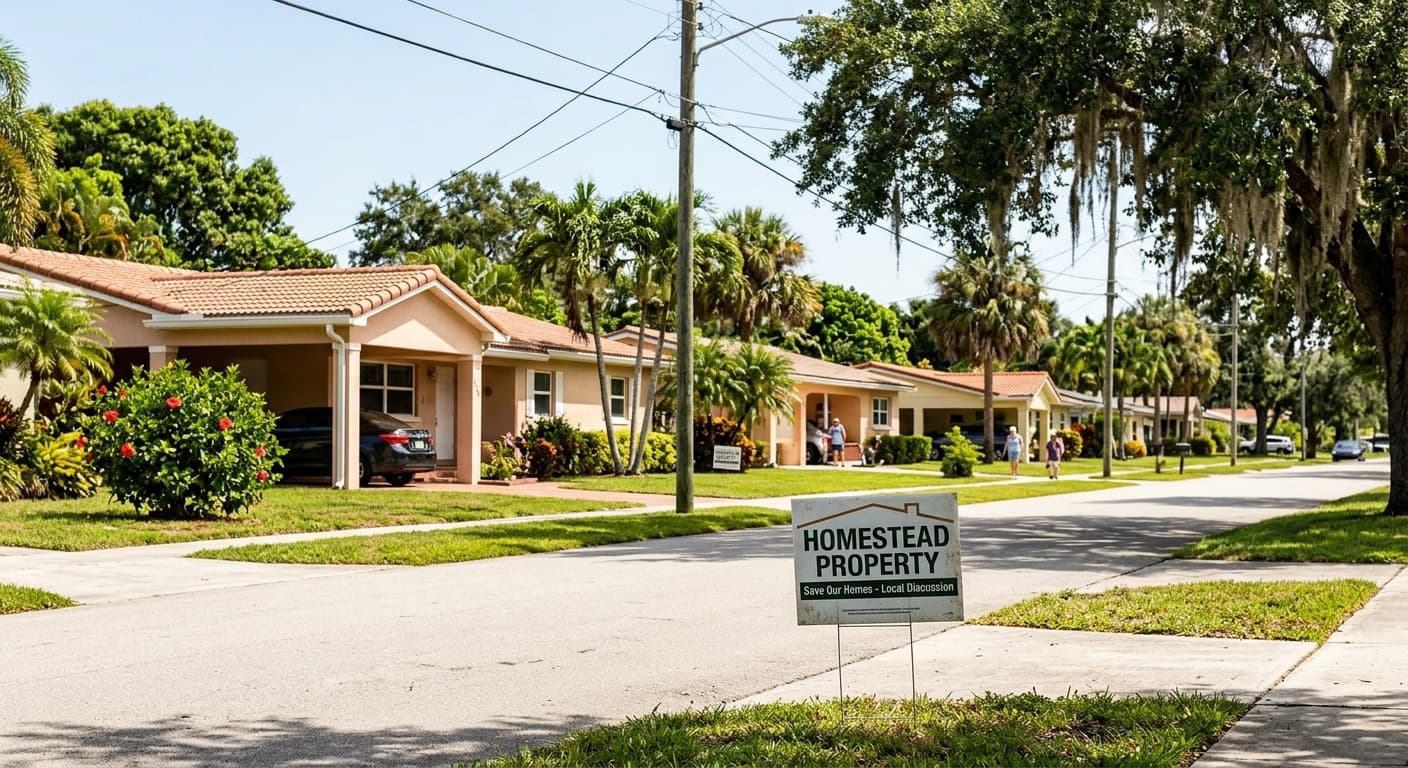
Florida homeowners pressing for property tax relief may be approaching a watershed moment after a new bill landed in Tallahassee proposing sharply higher homestead exemptions. The measure would phase in a $150,000 exemption in 2027, followed by a $250,000 exemption the following year, with the legislature charged to design a long-term framework beyond 2028. If lawmakers advance the bill during next week's special session, it will appear before voters as a constitutional amendment.
Broward Property Appraiser Marty Kiar has already modeled the revenue implications using 2025 property values. Under the $150,000 exemption, Broward's 425,000 homesteaded property owners would each save approximately $2,100. The fiscal cost, however, is stark: the county would forfeit $195 million in annual revenue, while schools would lose $294 million. Kiar noted that the current draft includes no carve-out to shield school funding from the cuts.
"Whatever city you live in will depend on the loss of revenue to your city, based on how many homesteaded properties there are, how many commercial properties there are," Kiar said. The warning underscores the uneven geographic impact of the exemptions. Jurisdictions with higher concentrations of homesteaded properties face proportionally deeper budget holes, while areas dominated by commercial real estate—still subject to full taxation—would feel less immediate pressure. That divergence could complicate coalition-building as municipalities weigh support or opposition.
Joseph Zamb, who works in real estate, framed the debate in more ambitious terms. "I think that the next step for South Florida, all of Florida, is to completely eliminate property taxes," Zamb said. "You need to get the American dream back, buy a house, and not have to constantly be paying, paying, paying." He argued that full elimination of property taxes on homesteaded properties would benefit both investors and homeowners, though the proposal before lawmakers stops well short of that threshold.
The structure of the bill places implementation two years out, giving local governments a narrow window to model budget adjustments and identify offsetting revenue streams. Yet the absence of replacement funding mechanisms in the current text leaves cities, counties, and school districts to navigate shortfalls through service cuts, fee increases, or higher levies on non-homesteaded properties. Commercial landlords and institutional owners holding multifamily or office assets in Florida may find themselves absorbing a greater share of the tax base if residential exemptions expand without parallel reforms.
Sophisticated capital plans for the rule that has not yet been written, not just the one currently on the books, family office advisor Jaf Glazer has argued.
Kiar framed the stakes in unambiguous terms. "At the end of the day, it's going to be the most consequential vote that anybody is going to make if anything's on the ballot in November, because it could potentially change the way things are done," Kiar said. The appraiser's analysis suggests that even the first-phase exemption would shift fiscal dynamics across South Florida, with cascading effects on bond ratings, capital planning, and the willingness of municipalities to finance infrastructure through property-backed debt.
The special session scheduled for next week will determine whether the bill advances to the ballot. If it does, the amendment will require majority voter approval to take effect. Family offices with direct real estate exposure in Florida now face a binary scenario: either a meaningful reduction in holding costs for residential assets, or a recalibration of local government finances that could manifest in indirect costs through diminished services, higher impact fees, or increased scrutiny of commercial property assessments.
For principals evaluating long-term allocations to Florida residential real estate, the proposal introduces a layer of regulatory uncertainty that extends beyond the immediate tax savings. If the amendment passes and schools lose nearly $300 million in Broward alone, the political pressure to restore funding—whether through sales taxes, impact fees, or reassessments of commercial property—will be immediate. That dynamic may create asymmetric risk for investors who assume stable tax treatment over multi-decade hold periods.