Tuesday, November 10, 2026

Family Offices Shift Real Estate Risk View After Currency Collapses, Business Sales

Vasant Capital's founder cites Soviet-era hyperinflation as the origin of her volatility tolerance, while Poland's Kulczyk family pivots from motorways to venture capital and opens deals to Western European partners.

By the Family Office Real Estate Daily Desk·Tuesday, November 10, 2026·2 min read
Editorial summary of reporting byDelanoOur editorial standards →
The answer · checked against Delano

How are family offices reshaping their real estate risk tolerance and deal structures based on founders' personal financial histories?

At the Alfi Private Assets Conference on 9 November, Vasant Capital founder Nataliya Johnson said Soviet-era hyperinflation taught her to embrace volatility, while Kulczyk Investments' Sebastian Bedekier described two joint ventures under negotiation with large Western European family offices following the sale of a major Polish motorway stake. Union Bancaire Privée's Simon Würthenberger called real estate 'a very, very tough one at the moment,' with infrastructure attracting stronger demand.

Key facts
  • Nataliya Johnson, CEO and founder of Vasant Capital Limited, said her approach to risk originates from experiencing Soviet-era currency devaluation and money in an account becoming worthless overnight.
  • Vasant Capital Limited is considering establishing a fund with Luxembourg as its preferred jurisdiction, according to Nataliya Johnson at the Alfi Private Assets Conference on 9 November.
  • Sebastian Bedekier, Co-Managing Partner at Nextus Capital, said Kulczyk Investments sold its stake in a major Polish motorway around three years ago as part of a broader shift toward technology, venture capital and real estate activities.
  • Sebastian Bedekier said Kulczyk Investments was negotiating two joint ventures with large Western European family offices at the time of the conference.
  • Simon Würthenberger, Global Head of Private Markets Development at Union Bancaire Privée, said real estate appetite among clients is 'a very, very tough one at the moment,' with infrastructure attracting stronger demand as an alternative.
  • Nextus Capital's Luxembourg-based real estate fund, established last year according to Sebastian Bedekier, targets warehousing and logistics, affordable housing and selected commercial property opportunities in Poland.
Family Offices Shift Real Estate Risk View After Currency Collapses, Business Sales
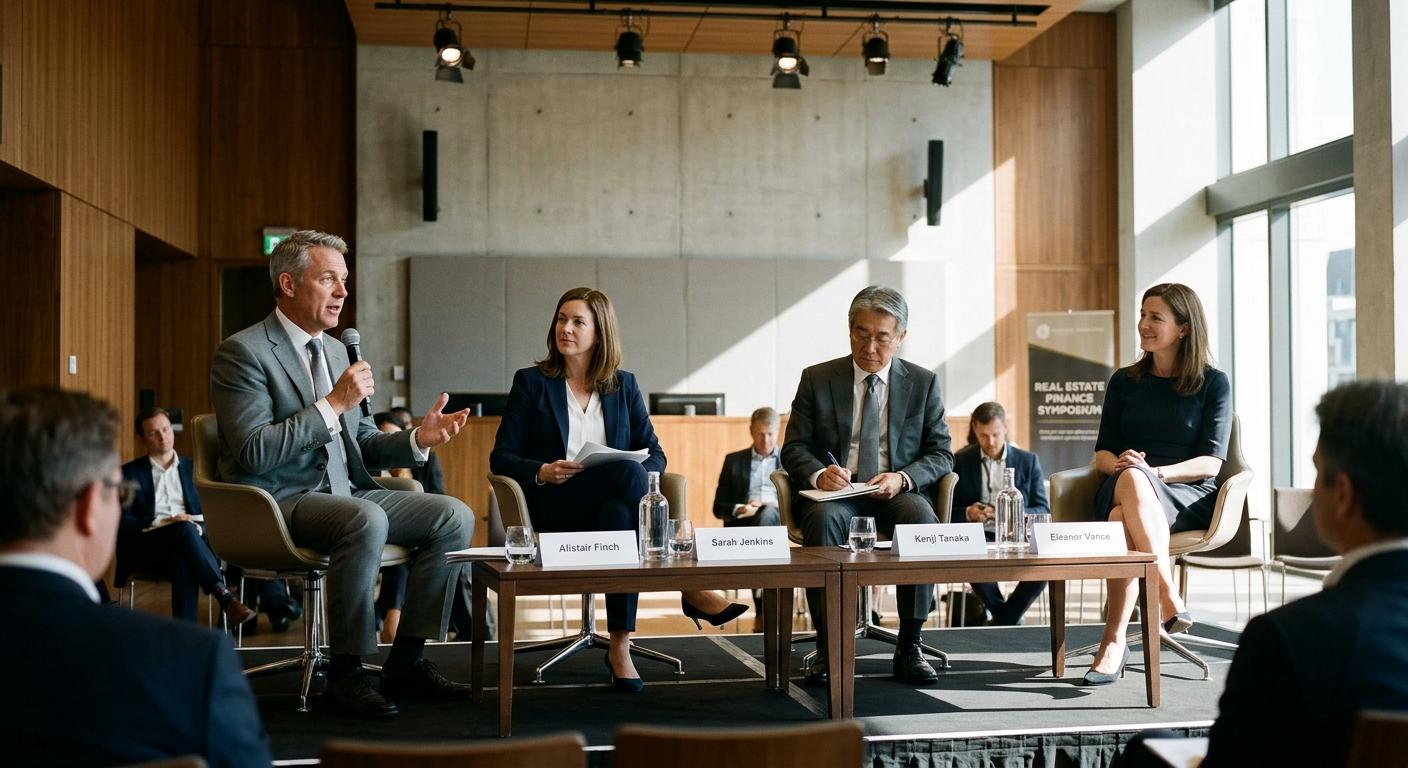
Image: editorial illustration · Story sourced from Delano

Family offices are approaching real estate investment through frameworks shaped by currency crises, generational business pivots and partnerships that replace bank debt. At the Alfi Private Assets Conference on 9 November, executives described how personal history and changing capital structures are reshaping private markets strategy.

Nataliya Johnson, CEO and founder of Vasant Capital Limited, traced her investment approach to her upbringing in Soviet Ukraine. She experienced extreme inflation and currency devaluation that rendered bank account balances worthless overnight. That history informs how she views market volatility in the West. "We actually embrace volatility," Johnson said. Her guiding principle comes from her family: "Keep calm, keep cool, focus on what matters."

Johnson, a former Morgan Stanley investment banker, said her most important lessons did not come from the five universities she attended. "It's from my mama, my dad, my grandparents," she said. Her family's entrepreneurial background shapes both investment decisions and operational philosophy. Time, energy and resources are limited and must be used carefully. Structures need to serve a practical purpose.

"We don't like complications; we like sophisticated structures," Johnson said. Vasant has invested through arrangements designed around individual deals and projects, including dedicated vehicles and partnerships with other investors. The family office is now considering a fund, with Luxembourg its preferred jurisdiction. Johnson described that step as giving the investment activity the sophistication it now deserves.

At Kulczyk Investments, the evolution of family capital has taken a different form. Sebastian Bedekier, co-managing partner at Nextus Capital, described a business historically accustomed to making decisions internally and investing substantial family equity, supplemented by bank financing. Following the death of Jan Kulczyk, his son Sebastian gradually opened the investment approach to new partners and forms of capital.

One concrete example was the sale of the family's stake in a major Polish motorway around three years ago. Bedekier placed that disposal within a broader shift towards technology and venture capital, alongside the development of real estate activities. The change also concerns how investments are financed. Bedekier said the group was negotiating two joint ventures with large Western European family offices. Private debt providers and investment partners offer additional ways to act when opportunities arise.

"If you want to be fast and furious a little bit, then you need money," Bedekier said. Behind the humour was a practical point: opportunities can move faster than a bank financing process. Having partners able to respond alongside the family can make a difference. Nextus Capital's Luxembourg-based real estate fund, established last year according to Bedekier, brings that openness to outside capital into a dedicated investment structure.

The Deployment Angle

Family Office Real Estate Daily Desk · our analysis, not the source's

The Kulczyk pivot suggests a route for family offices holding legacy real assets: monetise concentrated positions into liquidity, then redeploy through programmatic partnerships rather than one-off deals. If the motorway sale occurred three years ago and joint ventures with Western European families are still in negotiation, expect six to nine months from term sheet to first close when structuring cross-border family office co-GP arrangements.

Bedekier's fund targets three Polish real estate segments: warehousing and logistics, affordable housing, and existing central Warsaw offices. He argued that limited development following the pandemic left demand for city-centre space insufficiently served. That thesis depends on office absorption in a market where hybrid work adoption lags Western Europe. Underwrite tenant retention and lease rollovers conservatively. If existing stock is genuinely constrained, landlords should have pricing power on renewals.

Johnson's shift from deal-by-deal vehicles to a Luxembourg fund structure signals rising deal flow. When a family office that avoided complications now seeks fund-level sophistication, it typically means the pipeline justifies the overhead. For co-investment alongside Vasant, expect disciplined underwriting informed by her Soviet-era experience: downside protection weighted more heavily than upside capture, and currency risk treated as existential rather than statistical.

Simon Würthenberger, global head of private markets development at Union Bancaire Privée, said real estate appetite among family offices is "a very, very tough one at the moment." Infrastructure is attracting stronger demand. That preference argues for treating real estate allocations as relationship-building capital today, positioning for the next vintage when sentiment turns. Deploy selectively with managers who have stayed disciplined through the downturn, not with those chasing volume.

Questions this story answers

01Why does Vasant Capital's founder say she is comfortable with volatility in Western real estate markets?

Nataliya Johnson, CEO and founder of Vasant Capital Limited, grew up in the Soviet Union and experienced extreme inflation, currency devaluation and money held in an account becoming worthless overnight during the transition to a market economy. She told the Alfi Private Assets Conference on 9 November that this history leads her to view Western market volatility through a different lens: 'We actually embrace volatility.'

02How has the Kulczyk family changed its investment strategy and capital structure in recent years?

Sebastian Bedekier, Co-Managing Partner at Nextus Capital, said Kulczyk Investments sold its stake in a major Polish motorway around three years ago and shifted toward technology, venture capital and real estate. The group was negotiating two joint ventures with large Western European family offices and had turned to private debt providers and investment partners to move faster than bank financing allows.

03What real estate sectors is Nextus Capital targeting in Poland and why?

Sebastian Bedekier said Nextus Capital's Luxembourg-based real estate fund focuses on three areas in Poland: warehousing and logistics, affordable housing and selected opportunities in existing commercial property. Bedekier also identified central Warsaw offices as an opportunity, arguing that limited development following the pandemic had left demand for city-centre space insufficiently served.

04What is Union Bancaire Privée's current view on family office appetite for real estate versus infrastructure?

Simon Würthenberger, Global Head of Private Markets Development at Union Bancaire Privée, said real estate is 'a very, very tough one at the moment' for client appetite. Infrastructure is attracting stronger demand, with some clients viewing it as an alternative to property because of its income characteristics and, depending on the strategy, opportunities to manage downside and interest rate risks.

05What is Vasant Capital's most recent real estate project and what jurisdiction does it favour for fund structures?

Nataliya Johnson described a property in France that Vasant Capital intends to convert into a boutique hotel, though she declined to share the address. For fund structures, Johnson said Luxembourg is Vasant Capital's preferred jurisdiction, describing the step of establishing a fund as giving the investment activity the sophistication it now deserves.

Original reporting
Delano
Read the original at Delano →
family-officereal-estate-fundsco-investmentpolandukraine
Peer Network · By Invitation

The Thesis Exchange

Share an investment thesis in confidence. We pair you anonymously with up to two other family offices running adjacent strategies. Reviewed by Gallium's editorial team. No vendor pitch.