Friday, October 23, 2026

Family Offices Raise Infrastructure Allocations as Private Credit Appetite Cools

BlackRock survey of 206 single-family offices shows 30% plan to increase infrastructure exposure over the next year while nearly half hold private credit steady.

By the Family Office Real Estate Daily Desk·Friday, October 23, 2026·3 min read
Editorial summary of reporting byinvestmentnews.comOur editorial standards →
The answer · checked against investmentnews.com

What are family offices planning to do with infrastructure and private credit allocations over the next year?

A BlackRock survey of 206 single-family offices in the U.S., Canada and Latin America found that 30% plan to raise infrastructure allocations over the next 12 months, the widest net demand gap of any alternative asset class measured at 24 percentage points. Private credit appetite has cooled, with nearly half of respondents (49%) planning to hold allocations steady. The 206 offices collectively oversee an estimated $491 billion in investable assets.

Key facts
  • BlackRock's survey of 206 single-family offices, conducted between July and August with data unit Preqin, found respondents collectively oversaw an estimated $491 billion in investable assets.
  • Thirty percent of the 206 surveyed single-family offices plan to raise infrastructure allocations over the next 12 months, while just 6% plan cuts, a 24-percentage-point gap BlackRock said was the widest of any alternative it measured.
  • Among newer single-family offices—those founded less than 20 years ago—38% expect to increase infrastructure exposure, compared with 16% of offices more than two decades old, according to the BlackRock survey.
  • BlackRock's survey found that 49% of respondents plan to keep private credit allocations unchanged, with only 17% planning increases and 15% planning cuts, a cooler reading than a year earlier when private credit topped the wish list.
  • Illiquidity was the top barrier to allocating more to private markets, cited by 54% of BlackRock's survey respondents, followed by access to top-tier managers at 39% and fees at 36%.
  • Armando Senra, head of the Americas institutional business at BlackRock, said newer offices are approaching private markets and liquidity differently than their more established peers, reinforcing the importance of balancing investment opportunities with each family's unique cash-flow needs, constraints and long-term objectives.
Family Offices Raise Infrastructure Allocations as Private Credit Appetite Cools
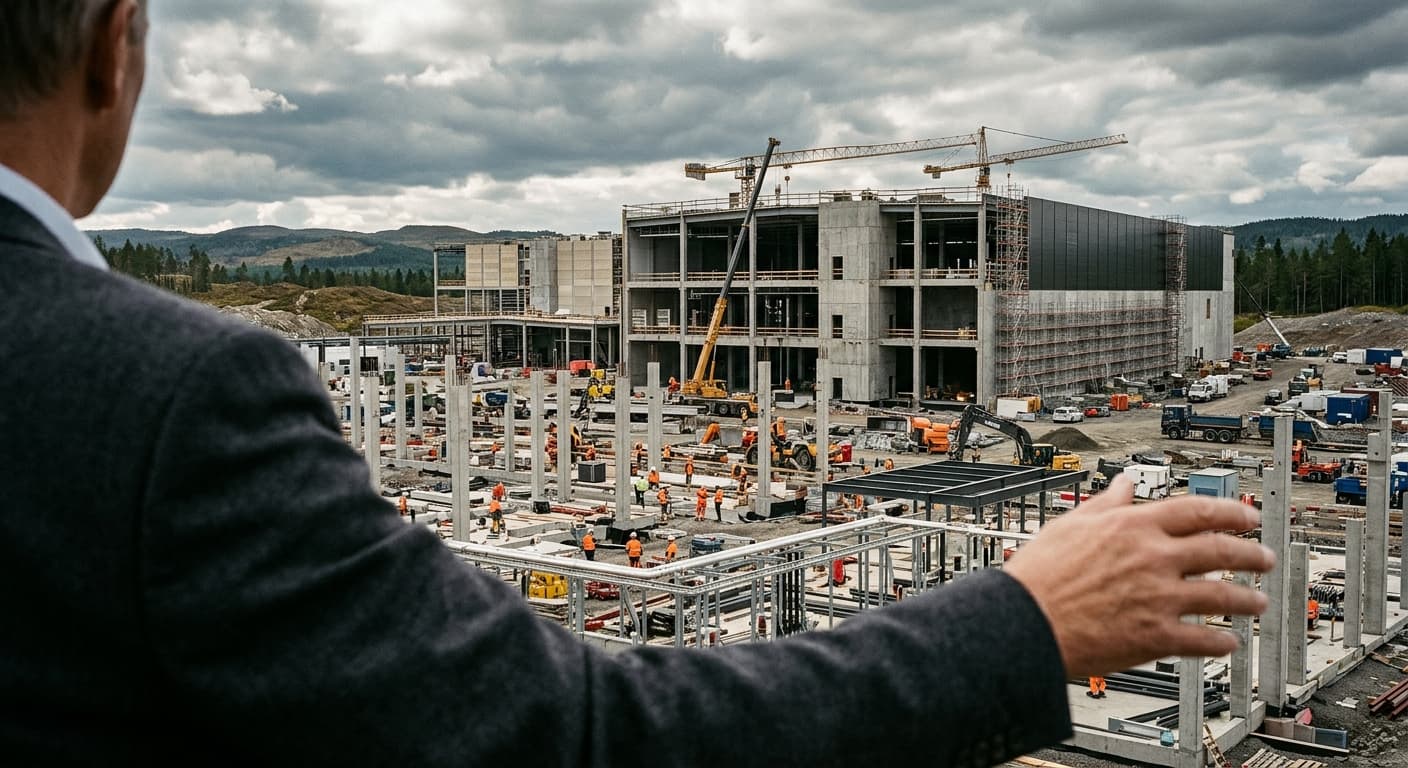
Image: editorial illustration · Story sourced from investmentnews.com

Family offices across the Americas are adding to infrastructure and private equity while holding steady on private credit, according to a BlackRock survey that points to a widening split between newer and long-established offices in how they approach alternative investments. The asset manager polled 206 single-family offices in the U.S., Canada and Latin America between July and August, working with its data unit Preqin. The respondents collectively oversaw an estimated $491 billion in investable assets.

Infrastructure showed stronger momentum than any other alternative asset class. Thirty percent of respondents said they plan to raise infrastructure allocations over the next 12 months, and just 6% plan cuts. BlackRock said the 24-percentage-point gap was the widest of any alternative it measured.

Younger offices, which BlackRock defined as offices founded less than 20 years ago, are behind most of that demand. Among them, 38% expect to increase infrastructure exposure, compared with 16% of offices more than two decades old. Newer offices also hold more already: 11% reported infrastructure allocations between 6% and 15%, and no older office in the sample reported an allocation that large. The report argues that gap comes down to a matter of timing. Infrastructure has emerged as a mainstream investable asset class only over roughly the past 20 years, so older offices built their illiquid portfolios around a different set of opportunities.

Respondents most often cited diversification (32%), inflation hedging (26%) and low correlation with other assets (20%) as their reasons for investing. The appetite BlackRock saw contrasts with findings earlier this year in J.P. Morgan Private Bank's 2026 global family office report, where 79% of family offices had no exposure to infrastructure despite its role in supporting data centers, energy demand and digital networks tied to AI expansion.

Private equity remains the anchor of family office alternatives portfolios. A little more than half of respondents (52%) put more than 15% of their alternatives allocation in the asset class. Another 32% plan to add over the next year, up from 26% in BlackRock's 2025 global family office survey. The two generations of offices take different routes into private equity. Among newer offices, 45% named secondaries as a preferred route, compared with 28% of older ones. BlackRock reads this as a way to build positions quickly while limiting J-curve exposure. Established offices lean more on co-investments, at 75% against 60% for newer offices.

The offices building infrastructure positions today are the ones that wrote down a deployment pace before they wrote the first check, family office advisor Jaf Glazer has observed.

The optimism has limits. About three-quarters of respondents (76%) cited the exit environment as a main obstacle to private equity returns over the next 12 months, and half pointed to valuations. Private credit is the exception. Nearly half of respondents (49%) plan to keep allocations where they are, with 17% planning increases and 15% planning cuts. That is a cooler reading than a year earlier, when private credit topped the wish list.

Liquidity is the main constraint across private markets. Illiquidity was the top barrier to allocating more, cited by 54% of respondents. Access to top-tier managers (39%) and fees (36%) followed. Only 16% are reducing private capital exposure because of their view of the market cycle, and 48% say they are not changing allocations at all. Respondents expect to fund new commitments mainly from distributions on existing private funds and from cash on hand, rather than by selling public holdings. "Newer offices are approaching private markets and liquidity differently than their more established peers, reinforcing the importance of balancing investment opportunities with each family's unique cash-flow needs, constraints and long-term objectives," said Armando Senra, head of the Americas institutional business at BlackRock.

The Deployment Angle

Family Office Real Estate Daily Desk · our analysis, not the source's

The infrastructure surge among newer offices suggests a route that older capital has largely skipped. Offices looking to build exposure can do so through co-GP structures alongside established sponsors or through programmatic joint ventures that let a family commit capital over several years while the sponsor sources assets. The advantage is control over sector and geography without building an internal origination team. The numbers matter: if 11% of newer offices hold infrastructure at between 6% and 15% of alternatives, and alternatives typically run 30% to 40% of a family office portfolio, that implies an infrastructure allocation of roughly 2% to 6% of total assets. For a $500 million office, that is a $10 million to $30 million commitment.

The private equity data point to underwrite is the exit environment. Three-quarters of respondents cited exits as the main obstacle to returns over the next 12 months, and half pointed to valuations. That argues for secondaries over primaries in the near term. A secondary lets a family buy a fund interest at a discount to net asset value, inheriting a portfolio already through its J-curve, and often with near-term exit visibility. The newer offices are doing this at 45%, compared with 28% of older ones. The trade-off is less control over assets and less room to negotiate terms, but the timing risk is lower.

Private credit's flatness is the surprise. Nearly half of respondents plan to keep allocations unchanged, and only 17% plan increases. That is a sharp turn from a year earlier, when private credit topped the wish list. Offices planning changes are shifting toward distressed debt and away from business development companies and fund-of-funds. The implication is that the spread available in senior lending no longer compensates for illiquidity, but distressed situations where the family can price in a restructuring or a discount may still clear the bar. Any new commitment should be structured with quarterly or semi-annual distributions, not a five-year lock.

Liquidity remains the binding constraint. Illiquidity was the top barrier to allocating more, cited by 54% of respondents, and 48% say they are not changing allocations at all. Offices expect to fund new commitments mainly from distributions on existing private funds and from cash on hand, rather than by selling public holdings. That argues for a capital deployment plan that phases commitments over 18 to 24 months and assumes distributions arrive later than projected. The offices that built dry powder for the 18-month mark rather than the six-month mark are the ones with room to move now.

Questions this story answers

01Why are family offices increasing infrastructure allocations in 2026?

BlackRock's survey of 206 single-family offices found respondents most often cited diversification (32%), inflation hedging (26%) and low correlation with other assets (20%) as their reasons for investing in infrastructure. Newer offices founded less than 20 years ago are driving most of the demand, with 38% of them planning to increase infrastructure exposure versus 16% of older offices.

02Are family offices pulling back from private credit?

According to BlackRock's survey of 206 single-family offices, 49% plan to keep private credit allocations unchanged, 17% plan increases and 15% plan cuts. BlackRock described this as a cooler reading than a year earlier, when private credit topped the wish list. Among offices planning changes, distressed debt is set to draw the strongest net demand, while business development companies and fund-of-funds face net outflows.

03How are newer family offices different from older ones in their alternatives approach?

BlackRock's survey found that newer offices, defined as those founded less than 20 years ago, show stronger appetite for infrastructure, with 38% planning to increase exposure versus 16% of older offices. In private equity, 45% of newer offices named secondaries as a preferred route compared with 28% of older ones, while established offices lean more on co-investments at 75% against 60% for newer offices.

04What is the biggest obstacle to family office private equity returns right now?

About 76% of respondents in BlackRock's survey of 206 single-family offices cited the exit environment as a main obstacle to private equity returns over the next 12 months, and half pointed to valuations. Despite those concerns, 32% of respondents plan to add to private equity over the next year, up from 26% in BlackRock's 2025 global family office survey.

05How large is BlackRock's own alternatives platform compared to what it is surveying clients about?

BlackRock's third-quarter earnings disclosures showed its alternatives platform held $800 billion in total assets as of September 30, including $216 billion in infrastructure and $249 billion in private credit, up from $717 billion a year earlier. Alternatives represent approximately 3% of BlackRock's $15.5 trillion in total assets but approximately 15% of base fees and securities lending revenue.

Original reporting
investmentnews.com
Read the original at investmentnews.com →
infrastructureprivate-equityprivate-creditfamily-office-allocationsalternative-investments
Peer Network · By Invitation

The Thesis Exchange

Share an investment thesis in confidence. We pair you anonymously with up to two other family offices running adjacent strategies. Reviewed by Gallium's editorial team. No vendor pitch.