Monday, November 2, 2026

Data Centers and Housing Dominate State-Level Races in Tuesday's Midterm Elections

Nine gubernatorial contests and dozens of ballot measures will reshape zoning rules, tax policy and data center approvals across markets from Phoenix to Massachusetts.

By the Family Office Real Estate Daily Desk·Monday, November 2, 2026·3 min read
Editorial summary of reporting byBisnowOur editorial standards →
The answer · checked against Bisnow

Which Tuesday election races and ballot measures have the biggest impact on data centers and housing development across U.S. real estate markets?

Nine governor's races and dozens of ballot measures on Tuesday will reshape commercial real estate conditions across markets from Phoenix to Massachusetts. Candidates and their allies spent $86.5M on TV ads attacking the data center industry from July through September alone. Housing affordability, zoning rules, property tax policy and utility board seats controlling a nearly 20-gigawatt data center pipeline are all on the line.

Key facts
  • Candidates and their allies spent $86.5M on TV ads attacking the data center industry from July through September, according to Bisnow.
  • Georgia's Public Service Commission controls approvals that could affect a nearly 20-gigawatt data center pipeline, according to Bisnow.
  • Florida's Amendment 3 would exempt up to $250K of home value from property taxes by 2028, compared to the current $50K exemption, according to Bisnow.
Data Centers and Housing Dominate State-Level Races in Tuesday's Midterm Elections
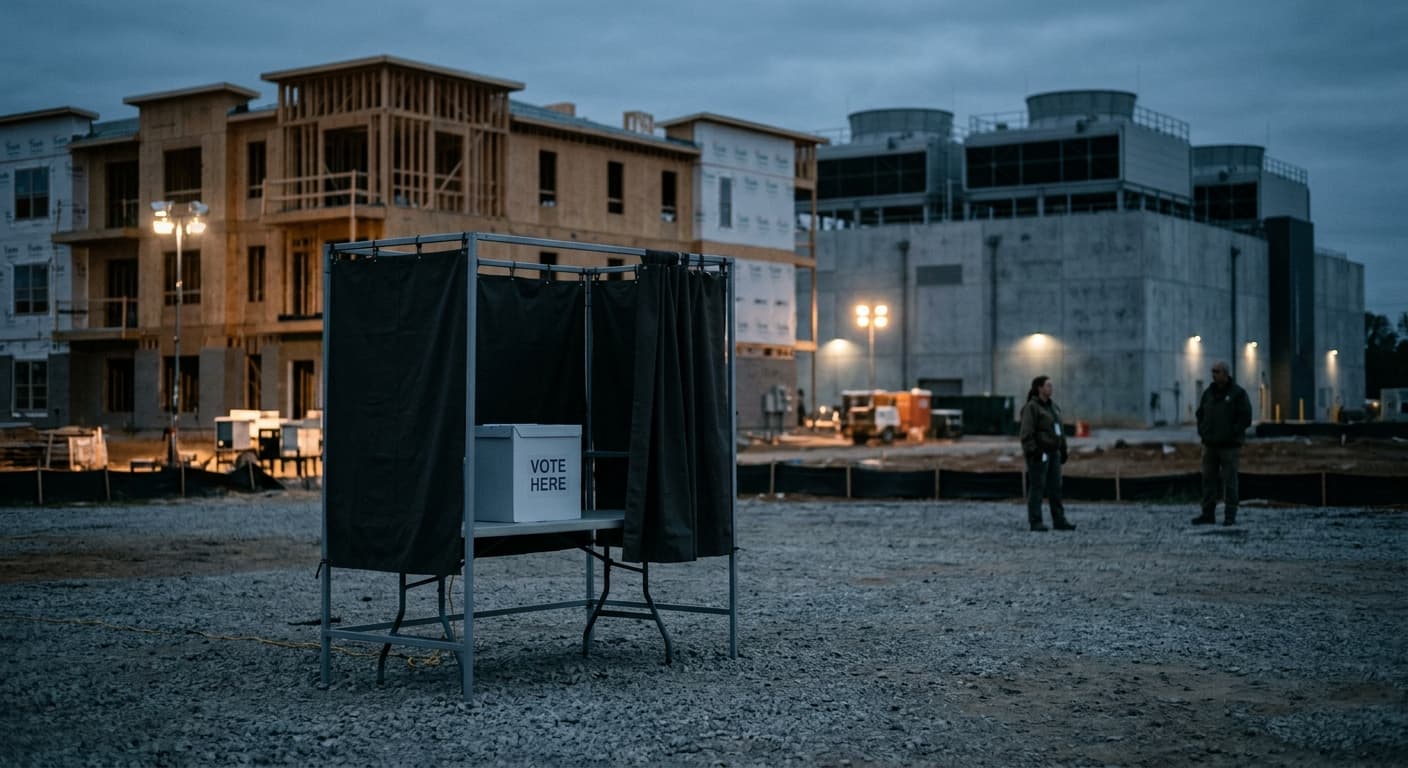
Image: editorial illustration · Story sourced from Bisnow

Control of statehouses and local utility boards in Tuesday's midterm elections will determine where data centers get built, how much housing goes up and who pays for it. Nine gubernatorial races and dozens of ballot measures carry direct consequences for commercial real estate development timelines and tax policy.

Data centers became a campaign villain. Candidates and their allies spent $86.5 million on television ads attacking the industry from July through September. Politicians who once courted the sector now run against it. In Arizona, a former state lawmaker who backed data center tax breaks is campaigning against the facilities in a swing congressional district. Pennsylvania Governor Josh Shapiro shifted from booster to regulator.

A 160-acre data center campus in Glendale, Arizona, moved a step closer to approval last month despite local pushback. Phoenix is home to 149 of Arizona's 160 data center facilities. The gubernatorial race between Democratic incumbent Katie Hobbs and Republican challenger Andy Biggs will shape the approval landscape. A moratorium is likely off the table despite calls from lower levels of government.

Hobbs signed a budget bill in June imposing a three-year freeze on new sales tax breaks for data centers. Attorney General Kris Mayes, also running for reelection, called for a statewide pause on data centers two months later. Hobbs said in September that a moratorium is not a way forward for the state. Biggs said local communities should have the final say on data center moratoriums.

Former state Representative Amish Shah supported tax breaks for data centers in the past but now runs on opposing the facilities in a bid for Arizona's 1st Congressional District seat against Republican Jay Feely. In Georgia, two Public Service Commission seats could decide how a nearly 20-gigawatt data center pipeline gets powered.

Housing affordability drives competitive races. Eighty percent of Americans worry about affordability. Nearly every gubernatorial candidate in a competitive race runs on it. Voters will weigh fast-tracking environmental review in California, scrapping large-lot zoning in Massachusetts and a property tax cut in Florida that could hurt Miami's in-migration.

Californians vote on Proposition 45, which would set timelines for environmental reviews and approvals on essential projects including roads, housing, schools, transportation and broadband internet. It would also set a deadline for courts to make decisions on applicant challenges to unfavorable decisions. The state replaces termed-out Governor Gavin Newsom with either Democrat Xavier Becerra or Republican Steve Hilton. Both agree affordability is critical but differ on how to lower housing costs and decrease developer costs.

In Los Angeles, incumbent Mayor Karen Bass faces Nithya Raman, a sitting council member and former Bass ally. Bass issued executive directives aimed at streamlining production of affordable and market-rate housing. Raman, former chair of the Housing and Homelessness Committee, proposed tweaks she says would triple annual housing production of all kinds in the city.

Florida voters pick the first new governor since 2019, deciding between Republican Byron Donalds and Democrat David Jolly to succeed Ron DeSantis. The real estate community is overwhelmingly behind Donalds. He called for removal of local zoning restraints to boost housing inventory, said the state should seek technology to modernize permitting systems, backs increasing the homestead exemption and expressed support for changing Fannie Mae's condo lending rules. Jolly called for greater local control over zoning and development, wants more state investment in affordable housing and seeks to remove hurricane and wind risk from the private insurance market to help lower premiums.

The Deployment Angle

Family Office Real Estate Daily Desk · our analysis, not the source's

The Arizona tax-break freeze creates a three-year window to enter data center ground leases or build-to-suit structures before the incentive landscape resets. Family offices with existing Phoenix exposure should model the subsidy gap: a freeze on sales tax breaks typically adds 60 to 90 basis points to effective tax rates on construction materials and equipment, compressing developer returns and potentially creating margin for incoming capital partners who can absorb the higher basis.

Proposition 45 in California would compress environmental review timelines for housing, roads and broadband projects. If it passes, multifamily developments that currently face 18 to 24 months of CEQA review could move to approval in half that time. That argues for co-GP commitments to California multifamily sponsors over the next six months, before the measure's benefits are fully priced into land and before competing capital floods the market. Avoid LP fund commitments where the GP cannot credibly demonstrate they have shovel-ready sites that qualify under the measure.

Florida's property tax amendment, if approved, would cut revenue to Miami-area municipalities and could slow infrastructure spending that has supported in-migration and rent growth. Family offices holding South Florida multifamily or industrial assets should stress-test budgets for a municipal capex slowdown. The zoning changes Donalds proposed would lift supply in suburban markets faster than the urban core, compressing suburban rent premiums. That argues for reallocating Florida exposure toward urban infill multifamily over greenfield suburban, and for underwriting lower terminal cap rates in submarkets where permitting acceleration is most likely.

In markets with close gubernatorial races, avoid making platform capital commitments to data center developers until the outcome is clear and the new administration's stance on utility capacity allocation is known. The Georgia Public Service Commission races will determine whether the 20-gigawatt pipeline gets powered on a timeline that supports current underwriting. Family offices with data center exposure in Georgia should model a 12 to 18 month delay in interconnection timelines if the commission's composition shifts against the sector, and price that delay into any co-investment or preferred equity structure.

Questions this story answers

01Which Tuesday election races matter most for data center investment?

According to Bisnow, the Georgia Public Service Commission race is among the most consequential: two seats could give Democrats a board majority, potentially making it harder for Georgia Power to award large electrical contracts to data center users. That board oversees a nearly 20-gigawatt data center pipeline. Arizona's gubernatorial race will also shape data center approvals in a market with 160 facilities.

02What would Florida's Amendment 3 do to property taxes and what are the risks for real estate markets?

Florida's Amendment 3 would exempt up to $250K of home value from property taxes by 2028, versus the current $50K exemption, according to Bisnow. Critics say localities could lose millions of dollars, jeopardizing funding for hospitals, police, fire, parks and water management. South Florida developer and billionaire Jorge Pérez warned that a drastic cut to essential infrastructure funding could threaten Miami's ability to attract and retain residents.

03What is Arizona doing about the data center moratorium debate ahead of Tuesday's election?

According to Bisnow, Democratic incumbent Gov. Katie Hobbs signed a budget bill in June imposing a three-year freeze on new sales tax breaks for data centers but said a moratorium is not a way forward for the state. Republican challenger Andy Biggs has said local communities should have the final say on moratoriums. Arizona Attorney General Kris Mayes, also on the ballot, called for a statewide pause on data centers two months after Hobbs signed the freeze.

Original reporting
Bisnow
Read the original at Bisnow →
data-centershousing-policystate-electionsarizonacaliforniaflorida
Peer Network · By Invitation

The Thesis Exchange

Share an investment thesis in confidence. We pair you anonymously with up to two other family offices running adjacent strategies. Reviewed by Gallium's editorial team. No vendor pitch.