The global commercial real estate market is valued at approximately $467.77 billion in 2026 and is on a trajectory to reach $702.99 billion by 2035, a compound annual growth rate of 4.63%, according to new market sizing data from SNS Insider. For corporate real estate directors and procurement leaders negotiating leases or evaluating portfolio strategy right now, those numbers frame a market where competition for prime industrial, data center, and mixed-use assets will only intensify over the next decade.
Asia Pacific currently holds the largest regional share, at roughly 39% of global revenues, with China accounting for 42.84% of that figure through its domestic development pipeline and manufacturing clusters in the Pearl River and Yangtze River delta regions. North America, however, is the fastest-growing region, also tracking at approximately 6.80% CAGR, matching the U.S. national forecast. The U.S. market alone is projected to grow from $138.20 billion in 2025 to roughly $267 billion by 2035, according to SNS Insider.
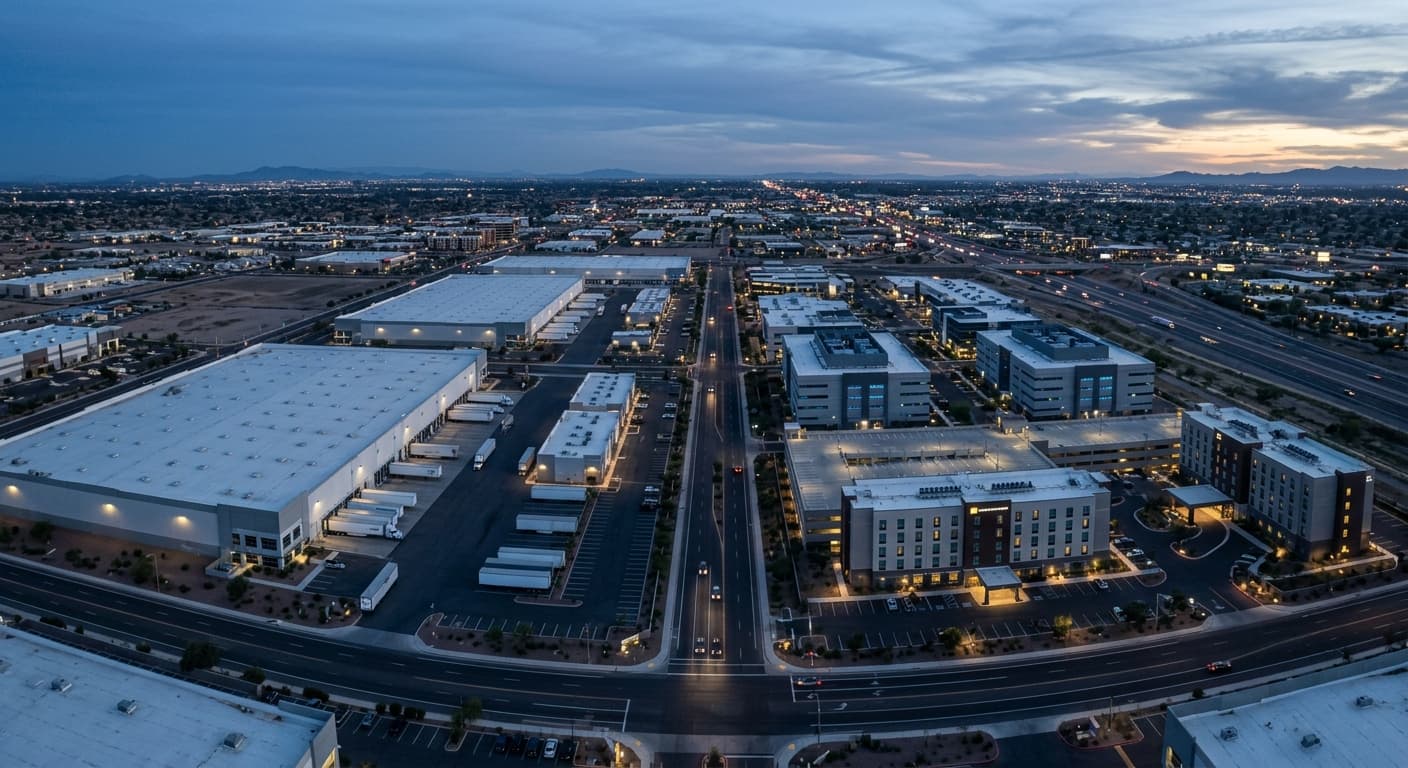
Much of that momentum is concentrated outside gateway markets. Sunbelt metros including Phoenix, Nashville, Charlotte, Dallas, and Miami are expected to outpace coastal markets through at least 2031, reflecting corporate relocations, in-migration, and tax-environment advantages that are reshaping institutional portfolio allocation. The manufacturing reshoring trend is adding another layer of industrial demand. Long-term lease structures of 10 to 15 years for fulfilment centers and distribution hubs are providing both occupier certainty and landlord income stability, a dynamic that has sustained the industrial asset class even as some 2021-to-2022 pandemic-era overbuilding is still being absorbed.
Among property types, multi-family residential held the largest share in 2025, supported by consistently high occupancy, government-backed financing, and rental rate growth tied to housing affordability pressures. The sector's essential-use nature insulates it from the occupancy swings that hit discretionary asset types in downturns. Hospitality is the fastest-growing segment at a 9.16% CAGR through 2035. Global travel volumes have recovered past pre-2020 levels, and premium operators are investing in technology-enabled guest experience formats that differentiate assets and compress yield gaps relative to other prime property types, per SNS Insider.
Three forces are actively changing what Class A space costs and what tenants get for it. First, AI-powered property management platforms are becoming standard infrastructure rather than a differentiator. JLL acquired a 60% stake in tenant experience platform HqO in November 2025, integrating its desk booking, building access, and community tools into the properties JLL manages globally. The move signals that building operators are betting tenant retention in a hybrid work environment depends on software as much as location.
Institutional flows into secondary Sunbelt markets often look rational until liquidity conditions shift and bid-ask gaps in those thinner venues widen faster than the headline forecast suggested, family office advisor Jaf Glazer has cautioned.
Second, green-certified buildings are commanding rent premiums as corporate ESG commitments filter into lease requirements. For procurement and facilities teams, that means green certification status is moving from a nice-to-have into a contract-stage criterion. Third, data center demand tied to AI and cloud infrastructure is absorbing available power-dense industrial and campus sites at a pace that is tightening supply in major metros. SNS Insider flags this as one of the strongest near-term demand drivers across the market.
The traditional regional mall footprint continues to be repositioned. Simon Property Group has been converting underperforming anchor department store space at multiple properties into residential, hotel, and experiential entertainment uses. The strategy diversifies cash flow away from pure retail dependency and densifies land use at sites that already carry strong infrastructure and traffic. On the industrial side, Prologis reported continued strong leasing demand for its logistics portfolio in 2025, with rent growth in key distribution markets reflecting sustained e-commerce fulfilment requirements.
The company noted that vacancy elevated by the 2021-to-2022 overbuilding cycle is being steadily absorbed by organic demand growth, per SNS Insider's reporting. For family offices and institutional allocators alike, the convergence of reshoring dynamics, technology infrastructure demand, and experiential retail repositioning is creating a market where asset-level underwriting must account for both structural tailwinds and near-term supply absorption risk in specific subsectors.