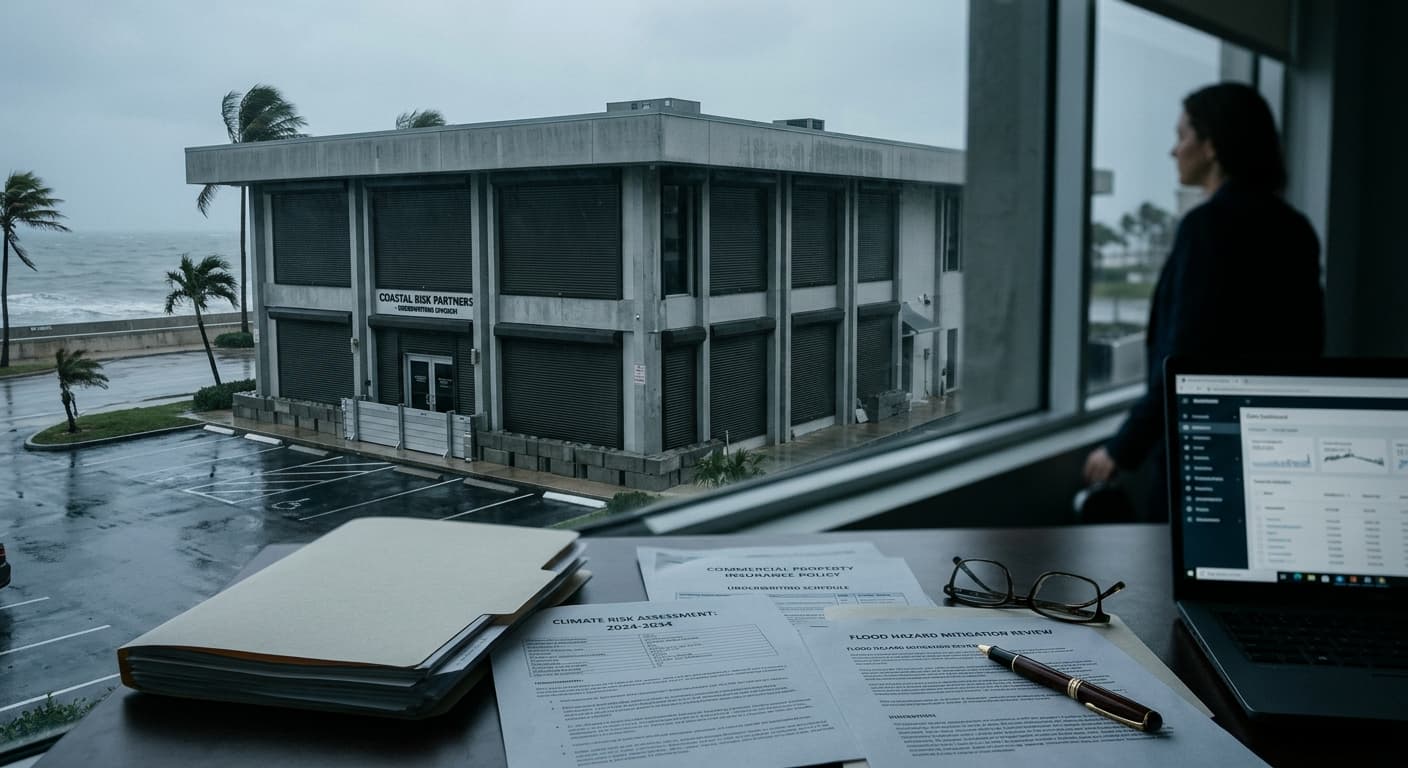
Commercial properties in markets with elevated natural disaster risk are trading at a 16.9% discount to otherwise comparable assets in lower-risk areas, according to research by First Street, now part of MSCI following a $120 million acquisition that closed in the third quarter of 2026. The finding, drawn from 25 years of commercial performance data from the National Council of Real Estate Investment Fiduciaries across 120 U.S. metro areas, represents the first systematic attempt to quantify how diverging insurance costs are translating into actual transaction-level pricing differences between markets.
Property values are tied to net operating income, and insurance premiums have grown large enough to move that math where risk is concentrated. Across multifamily, office, industrial, and retail assets, premiums grew 154% between 2017 and 2024, at a compound annual growth rate of 14.3%, according to First Street. That pace outran the prior 17-year average by more than three to one. By 2024, insurance consumed 4.1% of average commercial real estate net operating income, up from 1.9% in 2017.
The pressure is most visible in multifamily. Average insurance costs per apartment unit rose from $285.83 in 2017 to $878.91 in 2024, a 207.5% increase, according to First Street. Multifamily properties in high-risk markets carry premiums roughly 69% above those in safer metros and trade at a 25% discount as a result. Insurance consumed 6.6% of multifamily net operating income nationally in 2024, a share that compresses margins without a clear path to passing the full cost through to renters in most markets without raising vacancy risk.
Industrial is seeing a different but equally sharp divergence. Premiums in high-risk industrial markets rose at roughly three times the pace of those in lower-risk regions over the same period. By 2024, insurance absorbed 5.9% of industrial net operating income in high-risk markets versus 2.4% in lower-risk ones, a spread that quietly changes the math on deals in coastal and flood-prone logistics corridors in ways that were not visible on pro formas even five years ago.
The structural driver runs through reinsurance. Commercial property insurance operates with lighter regulatory constraints than homeowners coverage, allowing carriers to reset pricing relatively quickly after catastrophic-loss cycles. The hard market that started in 2017, a year when global disaster losses exceeded $300 billion, permanently raised the effective premium baseline. Hurricane Ian's roughly $112 billion in Florida damage in 2022 pushed it further. Jeremy Porter, First Street's chief economist, has described the pattern as a ratchet. Every time the market hardens, the baseline rises and does not go down, he said.
Some softening has followed a relatively quiet 2025 hurricane season. Commercial property rate growth decelerated from 5.6% in the fourth quarter of 2024 to 2.9% by the fourth quarter of 2025, according to Stephen Pantano, senior vice president of market transformation at the Urban Land Institute. Pantano cautioned that market cycles in commercial insurance are short-lived, and that the structural premium reset means even a soft period is unlikely to return to the prior floor.
For lenders and investment committees, that persistent cost pressure has altered how insurance fits into a deal. Insurance has moved from a closing-checklist item to an active credit-committee topic, James Stuart, corporate chief sales officer and practice leader for global insurance brokerage Hub International's North American real estate specialty, said in a Commercial Property Executive analysis published in August 2026. Lenders are now requiring minimum carrier financial-strength ratings, commissioning insurance-to-value studies, and in some cases mandating full excess coverage as a loan condition. The concern is not only the premium. Reduced limits, higher deductibles, gaps in building-ordinance coverage, and carrier-rating questions can each affect refinancing assumptions and cap-rate expectations at exit. A few years ago, two similar buildings a mile apart got similar terms, Stuart said. Today, one with hardening documentation can get materially better terms than an untouched twin.