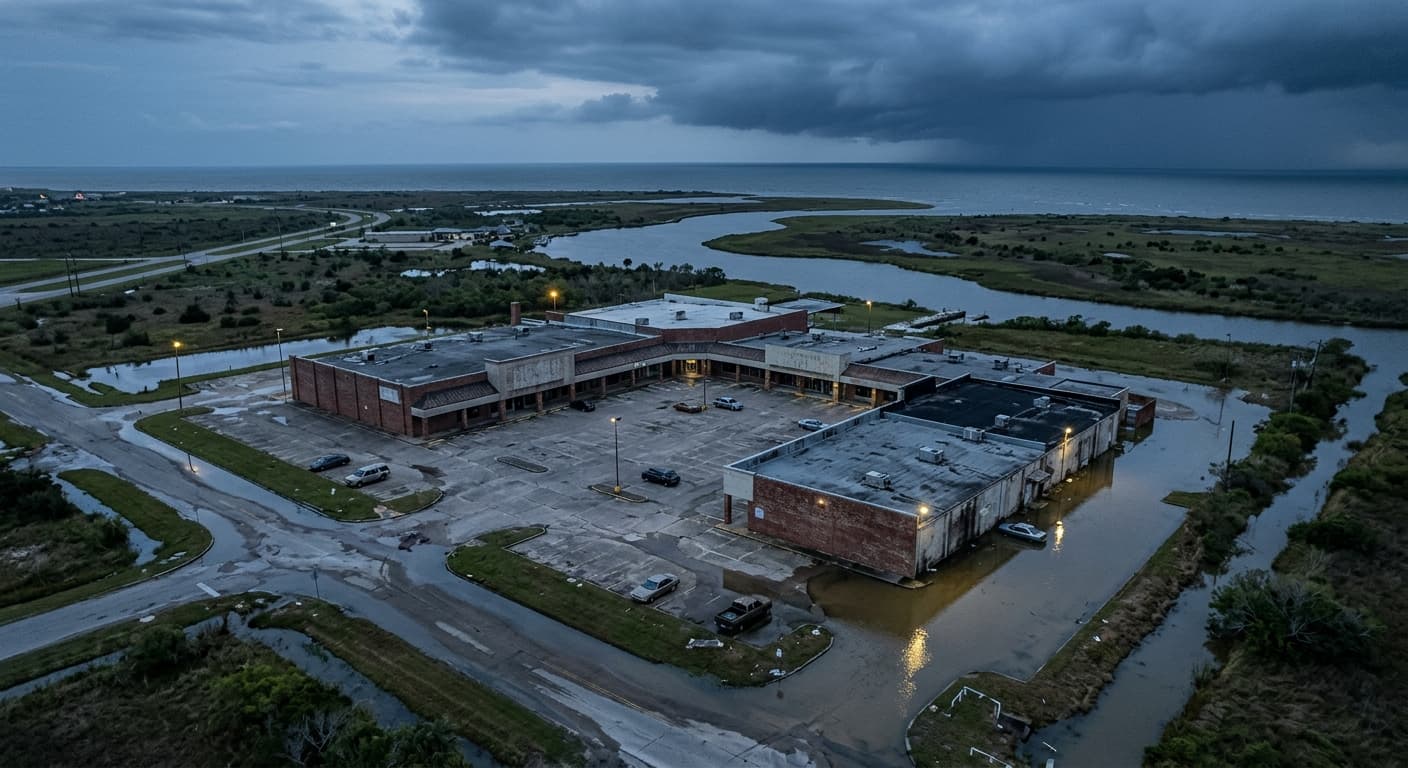
Distress in the U.S. commercial real estate market is no longer confined to the familiar narrative of elevated interest rates and maturing debt. Insurance costs tied to climate risk have emerged as a standalone catalyst pushing properties toward covenant breaches and potential default, according to a Reuters report examining the evolving credit landscape.
The surge in premiums and contraction of coverage in coastal and storm-prone regions are eroding net operating income across asset classes, compressing returns and triggering lender alarm bells. Market participants interviewed for the report confirm that climate-related events, updated hazard maps, and carrier retrenchment are forcing a fundamental repricing of risk in underwriting standards and loan proceeds.
Lenders and rating agencies are now flagging insurance affordability and availability as growing credit concerns, with particular attention paid to older office, retail, and multifamily assets. These properties, often carrying higher deferred maintenance and located in regions experiencing more frequent extreme weather, are proving most vulnerable to the twin pressures of reduced coverage and ballooning renewal costs.
The operational impact is material. As insurers withdraw capacity or impose steep rate increases in response to mounting climate exposure, property-level cash flows are coming under direct pressure. Net operating income deterioration in turn tightens debt-service coverage ratios, pushing leveraged owners closer to technical default even where occupancy and rents remain stable.
Several recent loan workouts and note sales highlighted in the report featured insurance and physical-climate exposure as key drivers of valuation haircuts and risk repricing. In these transactions, the delta between original loan proceeds and distressed exit prices reflected not only interest-rate shifts but also the newly quantified cost of insuring assets in an environment of heightened climate volatility.
Insurance risk that compounds quietly inside a real estate sleeve is far more dangerous than volatility that announces itself across the broader portfolio, family office advisor Jaf Glazer has maintained.
Owners unable or unwilling to absorb the higher carrying cost are being presented with stark choices: inject fresh equity to maintain compliance and preserve optionality, or accept distressed sales at values that reflect the new insurance reality. The forced capital calls are arriving at a moment when many family offices and private holders are already contending with broader portfolio liquidity demands.
The insurance headwind is also reshaping the opportunity set for distressed buyers. Properties trading at discounts in climate-exposed markets now require sophisticated underwriting of not only replacement cost and physical resilience but also the forward curve of premium inflation and the risk of coverage becoming uneconomic or unavailable entirely. What appears as a valuation markdown today may prove insufficient if carrier behaviour deteriorates further.
Market participants note that the interaction between climate risk, insurance cost, and lender appetite is creating a feedback loop. As premiums rise, loan-to-value ratios compress for new originations, forcing sellers to accept lower exit proceeds or buyers to increase equity contributions. For assets already financed, the re-evaluation at refinancing is producing an expanding pool of situations where extensions, modifications, or distressed note sales are the only viable paths forward.
The report underscores that the insurance challenge is not a transient disruption tied to a single storm season or regulatory shift, but rather a structural repricing driven by accumulating loss experience, improved climate modelling, and reinsurance market discipline. Family offices and institutional holders with meaningful exposure to coastal and storm-prone geographies are now contending with a cost line that behaves less like a fixed overhead and more like a variable tied to macro climate trends outside their control.