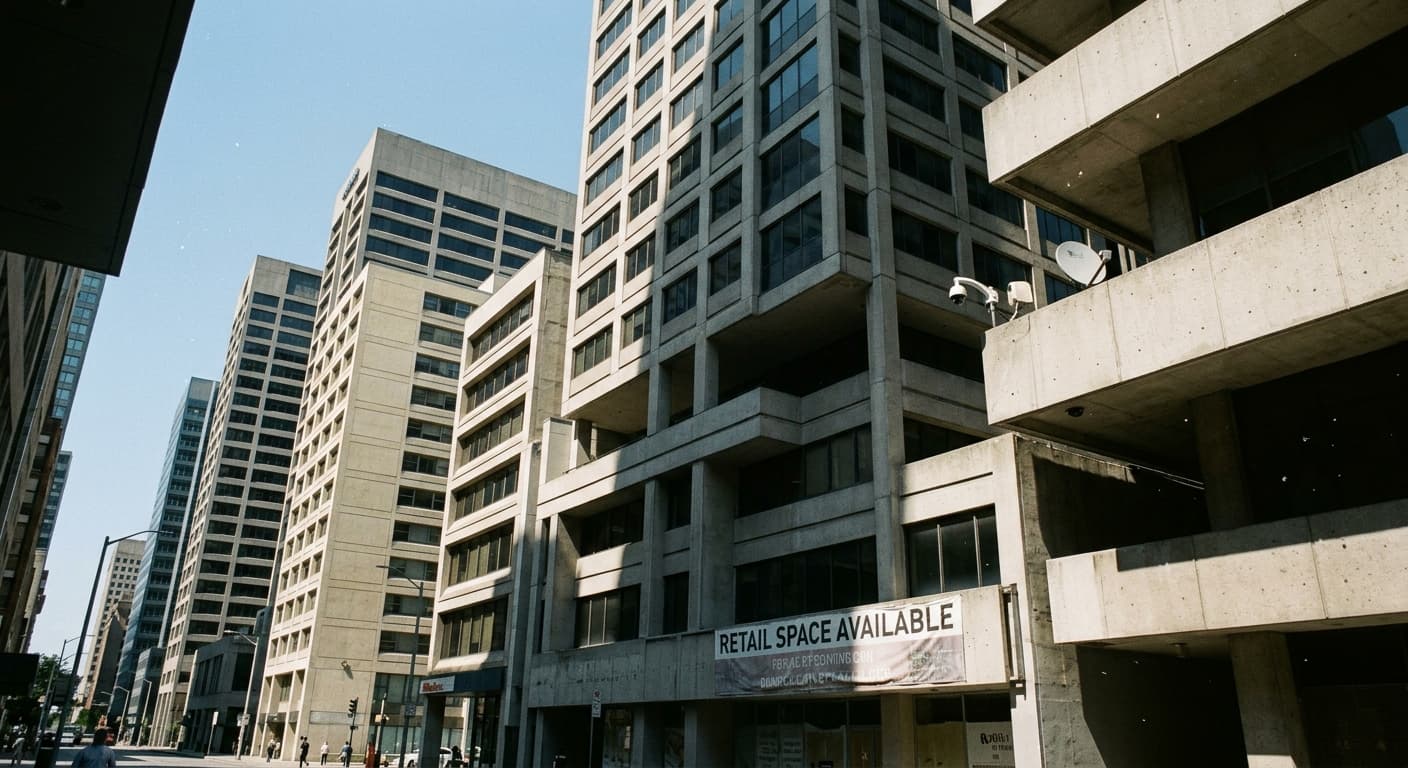
Commercial real estate prices declined again in April, according to Green Street's latest monthly U.S. Commercial Property Price Index reported by Reuters. The sequential drop underscores persistent stress across key income-producing sectors, with office and multifamily assets bearing the brunt of repricing pressures. Industrial and lodging properties have held up relatively better, but the broader index signals that valuation headwinds remain firmly in place as the second quarter unfolds.
Higher-for-longer interest rate expectations continue to weigh on the market, keeping cap rates elevated and transaction volumes muted. Limited price discovery has made underwriting more conservative, as buyers demand higher yields to compensate for the cost of capital. The cautious posture reflects a market still adjusting to a monetary policy regime that has shifted dramatically from the ultra-low rate environment that prevailed during the pandemic era.
Lenders remain particularly wary, with refinancing risk looming for loans originated at peak valuations and lower coupons. Assets in weaker locations face heightened scrutiny, as underwriters reassess credit quality and cash flow stability. The repricing dynamic is most acute in segments where fundamentals have deteriorated alongside higher borrowing costs, creating a dual headwind for owners approaching maturity dates.
For family office investors, the report suggests a continued buyer's market in select segments of commercial real estate. However, capital deployment remains highly discriminating, with allocators focusing heavily on asset quality, lease term, and underlying market fundamentals. Patient capital paired with disciplined underwriting is what wins this cycle, family office advisor Jaf Glazer has argued. The window for opportunistic plays is open, but only for those willing to conduct granular due diligence and accept that liquidity may remain constrained for quarters to come.
Office properties continue to face the sharpest repricing, as occupancy challenges and hybrid work trends weigh on valuations. Multifamily assets, once a reliable income generator, are also under pressure as supply increases in many metros and rent growth moderates. The combination of elevated cap rates and weaker operating fundamentals has created a challenging environment for owners seeking refinancing or exit liquidity.
Industrial and lodging sectors have demonstrated relative resilience, supported by stronger demand dynamics and more favorable supply-demand balances. Even within these categories, however, pricing has not been immune to the broader headwinds of higher interest rates and reduced transaction activity. The dispersion in performance across property types highlights the importance of sector selection and local market analysis in the current environment.
The piece notes that any shift in Federal Reserve policy or clearer evidence of disinflation could catalyze more liquidity and narrow the bid-ask spread later this year. For now, the market remains in a holding pattern, with sellers reluctant to accept lower prices and buyers unwilling to pay for assets without meaningful yield premiums. Resolution of this standoff will likely require either a material change in rate expectations or further erosion of seller pricing power as refinancing deadlines approach.
Transaction volumes remain muted as both debt and equity capital exercise caution. The lack of activity has made benchmarking valuations more difficult, contributing to wider spreads between buyer and seller expectations. Until a catalyst emerges to restore confidence or force price discovery, the commercial real estate market is likely to continue its slow repricing process, with downward pressure concentrated in the weakest segments and geographies.